Monday, July 3, 2017

Fortunate one


Some folks are born made to wave the flag
Ooh, they're red, white and blue
And when the band plays "Hail to the chief"
Ooh, they point the cannon at you, Lord
       -Creedence  Clearwater


Citizen ship we got mem'ries
Stateless, they got shame
Cast adrift from the citizen ship
Lifeline denied, exiled this castaway
          -Patty Smith


Greetings

    I hope you are enjoying this warm weather.  Being out in the garden, makes me wonder about what gardening will be like in the future.   Of course temperatures will rise.  May of 2017 was the second hottest on record See here    Check out this as you watch hardiness zones change from 1990 to 2006.   Or this
But let's not  forget variability .    Higher temps are only one side of the problem.  This paper from Hansen et al, shows that while the average temperature gets hotter, the range of possible temperature gets wider.
The width of the distribution has doubled since 1951-1980. 
Thus, plants not only have to be able to endure hotter temperatures, but a much more variable temperature regime.      

Eric Holhaus (weather nerd), reports on the drought in the upper midwest
"There's a quickly worsening drought right now in the upper Midwest. In just the last week, "extreme" drought expanded from 7.7 percent to 25.1 percent of North Dakota, the hardest-hit state. And next week, a multi-day heat wave is on the way. It's expected to reach as high as 107 degrees Fahrenheit in parts of the Dakotas, more than 20 degrees above normal.
Why does that matter? For one, it might seriously affect this year's wheat harvest there.
Wheat is humanity's most important grain food source, the United States is the world's largest wheat exporter, and the Dakotas and Montana are now the most important wheat growing region of the United States. Wheat prices have already gone up more than 10 percent in just the past few weeks in response to the drought. This year's American wheat crop is currently rated the worst in 29 years. In large parts of the Dakotas and eastern Montana, spring rains have been less than half of normal. Although this is a worrying development, it doesn't yet directly equate to a major food crisis, though—we won't know that until the harvest is completed in the comping weeks. According to one wheat analyst, "It’s pretty likely that we’ll get high-protein wheat at harvest -- there just won’t be that much of it."
Or this article in Grist
Rain fall coming in extreme bursts instead of evened out and longer, hotter longer heat extremes will take a nasty toll on bushels per acre totals.
/
A drought in the Dakotas spells trouble for the U.S. wheat harvest. Farmers in the Upper Midwest got a big dose of bad news Thursday: The extent of the region’s ongoing “extreme” drought has more than tripled in the past week.
Temperatures are expected to reach as high as 107 degrees next week in parts of the Dakotas, more than 20 degrees above normal. In large swaths of the Dakotas and eastern Montana, spring rains have been less than half of normal. On Monday, North Dakota Governor Doug Burgum declared a statewide fire and drought emergency.

Here's an interesting article about how farmers are coping.  It contains a rather odd sentence, I think
How much farmers will be affected will depend on how much the climate warms, Gepts says. If we stay within 1 to 2 degrees Celsius of current global averages, most farmers will likely be able to grow the same crops by changing their cultivation practices. But if global averages rise 3, 4 or 5 degrees, as many models predict, farmers will have to shift to entirely new crops.
It is interesting that the authors are able to consider the potential rise of 3, 4 or 5 degrees with such equanimity .    It may be a little tricky for farmers, but things will be fine for the rest of us?
The author must not have read this report by the World Bank Why a 4 degree C World Must be Avoided
Or this from the Climate News Network

By 2060, around 1.4 bn people could be climate refugees, driven from low-lying coastal cities by sea level rise. By 2100, as the global population may have reached 11bn, there could be 2bn climate refugees

Or this from here
ROME, Jun 7 2017 (IPS) – By 2025 –that’s in less than 8 years from today– 1.8 billion people will experience absolute water scarcity, and two thirds of the world will be living under water-stressed conditions. Now it is feared that advancing drought and deserts, growing water scarcity and decreasing food security may provoke a huge ‘tsunami” of climate refugees and migrants.
No wonder then that a major United Nations Convention calls drought ‘one of the four horsemen of the apocalypse.’ See what the United Nations Convention to Combat Desertification (UNCCD) says in this regard.

Speaking of climate refugees,  take a look at this map from the New York Times   which should give you an idea of where people are going to me moving from, and where they will be moving to (hint:  the PNW).  
        Is this avoidable?    Reduction in use of coal use is presumably good.  As long as humans are still in the drivers seat.     However, although CO2 emmisoons from fossil fules are flattening,  this is not translating into reductions in concentrations.  Scientists had thought it was merely an artifact of El Nino, and things would get into line once that was over.  However , the problem has persisted in 2017, despite the end of the El Nino.  see here
    Peerhaps it is like a bathtub with two taps.  The human burning of fossil fuels is one, while the natural impacts are another.   While human emmsiosn slow, with other factors increase? 
ill human emissions continue to stay flat?   See this from the New York Times 
When China halted plans for more than 100 new coal-fired power plants this year, even as President Trump vowed to “bring back coal” in America, the contrast seemed to confirm Beijing’s new role as a leader in the fight against climate change.
But new data on the world’s biggest developers of coal-fired power plants paints a very different picture: China’s energy companies will make up nearly half of the new coal generation expected to go online in the next decade.
These Chinese corporations are building or planning to build more than 700 new coal plants at home and around the world, some in countries that today burn little or no coal, according to tallies compiled by Urgewald, an environmental group based in Berlin. Many of the plants are in China, but by capacity, roughly a fifth of these new coal power stations are in other countries.

Crunch Time?
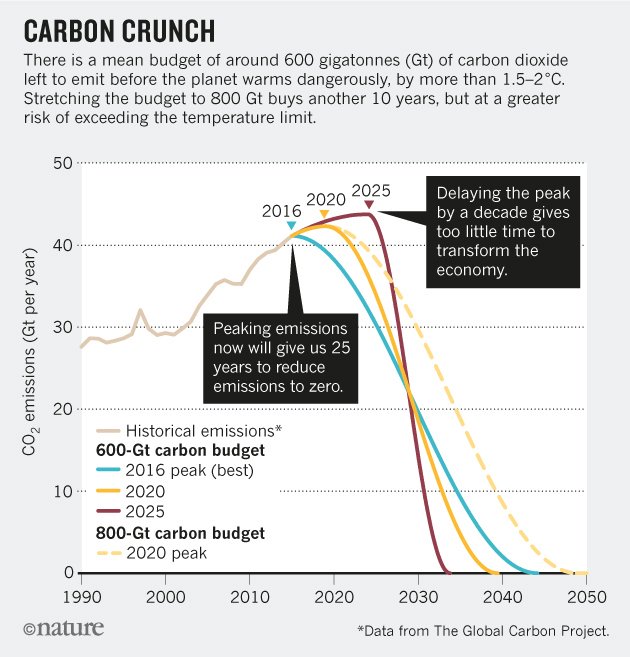
        A recent letter in Nature suggest that we have three years to put emissions onto a negative slope.

Embedded


But the idea that there is really any carbon budget left is  questionable.  Many non-human sources of CO2 or heat have begun  to play a more significant role in warming.See The Evidence Against the Existence of a Positive Carbon Budget

new scientific paper published in Nature Communication Journal demonstrates that the mechanisms of destabilisation of subsea permafrost, contrary to previous claims, provide new insights into increased emissions from the worlds largest deposits of methane, that exists in the East Siberian Arctic Shelf (ESAS).
The subsea permafrost has for thousands of years acted as a seal, restricting the flow of gas through the water column to the atmosphere. This paper clearly shows that permafrost degradation and the occurrence of gas migration pathways are key factors in controlling the emissions.  
Or this article on soil carbon 

A new Yale-led study in the journal Nature finds that warming will drive the loss of at least 55 trillion kilograms of carbon from the soil by mid-century, or about 17% more than the projected emissions due to human-related activities during that period. That would be roughly the equivalent of adding to the planet another industrialized country the size of the United States.
Critically, the researchers found that carbon losses will be greatest in the world’s colder places, at high latitudes, locations that had largely been missing from previous research. In those regions, massive stocks of carbon have built up over thousands of years and slow microbial activity has kept them relatively secure.


Something to think about as weatch the "bombs bursting in air"

Here's one opportunity help out those folks who have had to leave their homes
http://salemforrefugees.org/

Labels: , , ,

Wednesday, September 2, 2015

Burning Man

How can we sleep
When our beds are burning?
     - Midnight Oil

I'm only happy
when it rains
   -Garbage

Greetings
         First I'd like to give a shout out to the Deumling family, and congratulate them on the nice piece in the Willamette Valley Life about Zena Forest Products.  Way to go!. 
         And speaking of trees,, how about those wildfires?   It's pretty easy to ignore what's going on over the mountains.  Until the wind shifts!   That smoke brought it home to the valley. Seems like everything is on fire
        In case you are keeping score, 2015 is on track to break the record for the number of acres burned by wildfire   Of course Alaska accounts for the majority of those fires.   NASA is treating Alaska as the test case for what's to come for the rest of us..
      Here's a good place to see the latest state by state.  Wunderground
     I know a guy who has a bumper sticker that says " Trees are the answer"  .   I've never asked what the question is. :>)   Currently, of course,  forests are a carbon sink.  This may change in the near future, as increased wild fires may turn forests such as the northern boreal forest into a carbon source     But trees are very helpful.  For instance ,living near them is good for your health.   And trees are responsible for a good chunk of the air we breath.  They are the lungs (as well as the heart) of the planet.  So let's give a little credit there!
      Unfortunately, its not just fire that is having an impact on the trees.  The drought is having its own effects .  ( I'm sure Sarah and Ben can point to many stressed trees here in the valley).  Here's an interesting story about the giant sequoias down in California.
    "Some of the trees in Sequoia National Park were a thousand years old when Julius Caesar crossed the Rubicon. Last year, Stephenson spent a few days crawling around the forest floor examining sequoia seedlings, convinced they'd be affected by the heat and the drought.
"They all looked really happy," he says. "I sat back, scratched my head and looked up, and there was a huge adult giant sequoia that had a lot of foliage die-back in it. That really got us interested, and we figured the drought was probably the cause of that. And that created a cascade of studies."
They found that a significant number of older trees that had shrugged off the Dust Bowl in the 1930s were losing as much as half of their leaves.
"Ten per cent of the trees had 25 to 50 per cent die-back," says Koren Nydick of the U.S. National Park Service. "This is the first time that this kind of foliage die-back has been observed since this has been a national park."
       According to this report, the effects of drought remain for four to five years after the drought is over..  
      
        So, what's all this got to do with Burning Man?    That alternative arts festival, takes place in the Black Rock Desert of Nevada, a very remote location.  Some 60,000 fellow citizens converge there from all over the earth.  It even has its own temporary airport!  If you are really cool, like Mark Zuckerberg, you can drop in by helicopter. .   People dress up in interesting costumes, and celebrate , by burning a huge wooden man.  Very symbolic, if you ask me.  Estimates vary, but it probable is responsible for 49,000 tons of greenhouse gases.   Somewhat ironically, the Burning Mam credo is "Leave no trace"
         But, really, why pick on Burning Man?   Its probably less harmful than the Olympics, or the Super Bowl, or Mardi Gras.  Or how about the mass exodus to the coast for the Labor Day weekend?    Really, we are all Burning (Wo)Men.     And we are begnning to feel the heat.
         William Catton suggested a new name for the new species of human, that had so many "energy slaves" it could have 30 times the impacts of a normal "pre-industrial" human.    He called it "Homo Colossus"   Perhaps another name  might be  "Homo Torrens" - Burning Man


Labels: , , , ,

Friday, April 3, 2015

water


There is water flowing under rock
    -Talking heads

Cool clear water
    -Hank Williams


Greetings

   Well the big news is that Gov Brown of California has imposed water saving measures on some California users.   (It's probably worth noting that although 80% of California's water use is for agriculture, but Gov Brown's  measures don't address agricultural use, so its unlikely to have   a big impact  see e.g.  How Ag Gamed Cal's drought)

        Here are some charts which show how bad it is there.  The situation is pretty severe .  Here's what the senior water specialist at NASA, and professor at Caltech said:

"Right now the state has only about one year of water supply left in its reservoirs, and our strategic backup supply, groundwater, is rapidly disappearing. California has no contingency plan for a persistent drought like this one (let alone a 20-plus-year mega-drought), except, apparently, staying in emergency mode and praying for rain."

   California agriculture provides a lot of stuff on our supermarket shelves such as over 90% of almonds, walnuts, broccoli, tomatoes, and strawberries.  Groundwater is the "plan B"  for many farmers, and although, it is widely known that pumping is at an unsustainable rate, groundwater pumping is largely unregulated.  The LA times notes: 

"The Central Valley aquifer extends for about 400 miles under the Sacramento and San Joaquin valleys. The subterranean water, some of which seeped into the ground 10,000 to 20,000 years ago, is California's biggest reservoir. Yet it has been largely unregulated and unmonitored. Most of the more than 100,000 wells that pierce the valley floor are unmetered and landowners have taken what they wanted."


    Perhaps we should put this in historical context.  Here is an interesting article, analyzing the climate variation over the last 1000 or so years.  I didn't realize that what we consider "norrmal" for California i.e. the 20th century, , is actually an unusually wet period.   The author notes

"Consider what happened in the American West in the early 20th century, when population grew roughly 50% from decade-to-decade, the largest regional growth spurt in post-colonial American history. People were lured by warm temperatures and abundant moisture. For much of that period, believe it or not, the West was a green paradise. Abundant moisture was so much du jour that allocation rights for Colorado River water, which have been contended ever since, were based upon what turns out to be the wettest period in nearly 1200 years. Had early 20th century planners had modern climatological analyses in their hands, it’s doubtful they would have been so profligate with water distribution from what really is the only big river in the Pacific Southwest."
   
For more analysis of the pre historic record, see also Nation Geographic : Could California's Drought last 200 years?, and this paper on the 9th -14th centuries - "medieval climate anomaly".

     We are naturally concerned about the problems here in the US, but we should probably also be aware of similar problems elsewhere.  For instance Sao Paulo, the largest city in South America, is also suffering from a historic drought.   The local reservoir has enough water to last until June.  The rainy season doesn't start until November.   Here is one report from PRI

"The region is in its worst drought in 80 years. The reservoir that supplies half the city is just over 10 percent full. The government has begun rationing water, though haphazardly.
Many people in São Paulo are worried their future may look a lot like what happened last year in the small, nearby city of Itu.

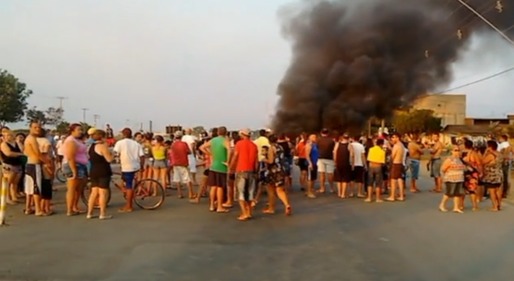
Last August, without warning, the city's homes had their water supplies shut off. Residents had to use public taps, and neighbors fought neighbors as dozens of people swarmed around the faucet. The outage went on for weeks, stretching into September. Itu resident Alexandre Oliveira remembers it as “a water war."
Oliveira volunteered as a water carrier for homebound neighbors, but others charged for the service and became known as “water traffickers.”
Emergency water trucks were eventually called in, but there weren’t enough. When they did arrive, some residents blocked the trucks with flaming barricades to make sure they didn’t leave before every house on the street got water.
But in some low-income neighborhoods, the water trucks never came at all. Elsa Barbosa, who lives in the favela of Chácaras Reunidas Ypê on the edge of Itu, eventually started to use water from a disused old well. “We had to boil it a lot,” she says. “There were stomach aches and vomiting.”
       
How about the future?  Well, according to a recent  UN Report, at current usage rates, the world will have 40% less fresh water than it needs in 15 years.   see .. Why fresh water shortages will cause the next great global crisis   What are some likely consequences?  Check out this site "World Water Conflict" for an in depth look at the history and future of water conflicts around the globe.

Labels: , , , , ,

Friday, October 31, 2014

Refugee

Should I stay or should I go, now
If I go, there will be trouble
If I stay, it will be double
      -The Clash

You don't have to live
like a refugee
   -Tom Petty

Greetings

    Are we entering the era of climate refugees?     I tend to think of Islands slipping under the sea., see e.g ,Tuvalu residents seek residency in New Zealand  but perhaps it also will  be drought that will trigger some mass movements.

   For instance , things are looking grim for Sao Paulo, Brazil.  .  A city of 20 million, it is facing the worst drought in 80 years.   The reservoir which feeds it is reported to be a 3% capacity.    the drought is also affecting Brazil's hydroeltric capacity

-------


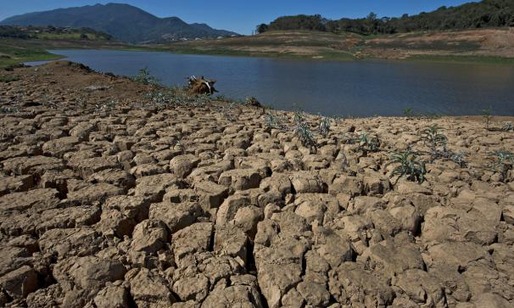
Images of the drought conditions in Brazil's Cantareira water system, which supplies water to 45 percent of Sao Paulo. Credit: Getty Images / via the Weather Channel
South America's biggest and wealthiest city may run out of water by mid-November if it doesn't rain soon. São Paulo, a Brazilian megacity of 20 million people, is suffering its worst drought in at least 80 years, with key reservoirs that supply the city dried up after an unusually dry year. — Thompson Reuters Foundation
One of the most important reservoirs in Brazil is the Cantareira watershed, which supplies around 45% of the city of São Paulo's water. Back in August, authorities warned that the city, which is the largest on the continent, could run out of water in 100 days if the waters dropped to 12%. Now, supplies are at a record 3.3% and creating shortages for over 30% of the city's 44 million residents. According to the Financial Times, residents in 70 other cities in the state of São Paulo have experienced water outages, some of which have gone on for days. Despite some minor efforts to curb usage – such as reducing water pressure by 75% at night–, Vicente Andreu, president of Brazil's Water Regulatory Agency, has stated that São Paulo should prepare for a "collapse like we've never seen before" in the next few weeks.
President Dilma Rousseff, who just won reelection, had used the drought as a major campaign issue. She claimed that Governor Geraldo Alckmin, whose a member of the opposition party, has not been doing enough to curb the water shortages, even asserting that he refused federal money that was offered. Reuters reports that vital restrictions on water usage never were passed because of fear of reprisals in these elections.
Part of the reason that the drought is so exceptional is because of climate change and deforestation, scientists assert. A leading climate scientist, Antonion Nobre states, "Humidity that comes from the Amazon in the form of vapor clouds - what we call 'flying rivers' - has dropped dramatically, contributing to this devastating situation we are living today." The Amazon rainforest in Brazil has been ravaged by deforestation in recent years. A forested area the size of New York City was hewed over the course of a single year, between 2012 and 2013. The lack of trees – which once released billions of gallons of water – coupled with changes to the global climate are, quite literally, drying the region out.
The economic toll from the drought is already beginning to be felt and will likely grow worse. Half of the country's textile producers are in São Paulo and are unable to continue their dyeing processes because of the water scarcity. Solvay’s Rhodia chemical plant halted some of its production, as well. Meanwhile, concerns that the drought will affect the country's soybean production has brought up prices worldwide. The state of São Paulo is responsible for a third of Brazil's GDP, so any slowdown there would bring down the country's overall growth.
Brazil has been racked by protests for the past several years. Now, people are rioting explicitly because of water (or the lack thereof). In the city of Ito, outside of São Paulo, people have beenburning buses and hijacking water tankers. 
Of course, the state of São Paulo is not the only place in the world currently experiencing water shortages. According to the Global Drought Information System, other regions experiencing extreme drought conditions include: Northern China, Somalia, Kenya, the southwest United States, and most of Australia. 
 

Labels: , ,

Saturday, August 2, 2014

It's a dry heat


I went to the desert on a horse with no name
It felt good to get out of the rain
    -America


On a dark desert highway,cool wind in my hair
Warm smell of colitas, rising up through the air
Up ahead in the distance I saw a shimmering light
    -Eagles (Hotel California)

Greetings

     It's long been a truism that whatever happens in California, eventually happens everywhere else in the US, and the world.   This drought may be an example.  Below the blogger RobertScribbler provides a good update, and taste of the future desertification of the large portions of the country, in the longer term.

       For more context on the situation in California , here is a report from Stanford, discussing the increasing use of groundwater.  Groundwater  represents 60% of agricultural use currently.  The removal rate is about twice the recharge rate, so groundwater levels have dropped in some cases 50-100 feet.

      Looking at the bigger picture, . here is the Earth Policy Institute's fact sheet on water resources around the world.  Here is where the head of the world bank predicts water and food wars in next 5-10 years.

      Finally here is a report, by the Vermont law School and CNA,  focusing on the use of water for power generation.  (h/t LarryT).  Its finding reinforce the World Bank's conclusions;

"The research, which included projections of the availability of water and the growth of the world’s population, found that by 2020, between 30 percent and 40 percent of the planet will no longer have direct access to clean drinking water. "


Respond to this post by replying above this line

New post on robertscribbler

Exceptional Drought Blankets 58 Percent of California; Reservoirs Missing One Year’s Worth of Water

by robertscribbler
For California, the punishment just won't stop.
Human warming and a climate change induced blocking pattern have withered California under record drought conditions for the better part of three years now. A vicious trend that worsened again in recent days with yet another jump in drought severity as exceptional drought conditions surged to cover a majority of the state.
Previous week's values of 36 percent exceptional drought coverage rocketed to 58 percent in just one week. Exceptional drought is the highest drought category for the US Drought Monitor, representing the most extreme conditions in the measure. So most of the state is now sweltering under the nation's worst drought category with the remainder covered by extreme and severe drought:
California Drought July 29
(US Drought Monitor map of California showing 58 percent of the state covered in exceptional drought [brick red], 23 percent covered in extreme drought [red], and the rest covered in severe drought [orange]. California is now entering its fourth month of 100% drought coverage after more than three years of abnormally dry conditions.)
One hundred percent drought coverage with worsening conditions has been the prevailing pattern ever since May when drought first surged to blanket the entire state. Since that time, conditions have been steadily worsening with agricultural regions drying out, farmers, communities and industries forced to further deplete limited ground water supplies, and with reservoirs dropping despite best efforts by federal and state officials to conserve.
As a result, state supplies are being hammered. For, according to a report released today by the National Drought Mitigation Center, the state is “short more than one year’s worth of reservoir water, or 11.6 million acre-feet, for this time of year.” In other words, if a year's worth of rain fell over the state tomorrow, it would barely be enough to bring reservoir levels back to normal.
So far, drought effects have been mitigated, mostly through the above-mentioned reliance on ground water supplies. But it remains questionable how long such activities can continue. And despite even these efforts thousands of agricultural workers have been laid off amidst a 2 billion dollar loss for the state's food industry.
As ground water and reservoir levels continue to drop, officials have grown more anxious to enforce conservation measures. To this point, fines in excess of 500 dollars have been levied for residents hosing sidewalks and driveways, for excessively watering their lawns, or for other water intensive practices. To this end, many municipalities have hired 'water police' to patrol neighborhoods and enforce water conservation measures.
Climate Change and A Mangled Jet Stream
Recent scientific studies have made a strong link between the historic California drought and ongoing changes to Earth's climate resulting from human greenhouse gas emissions. Many of these changes involve heat-driven alterations to Earth's atmospheric circulation. For as the Earth warms, it does so unevenly. In regions near the pole, and especially above 60 North, temperatures have risen by, on average, about 0.5 degrees Celsius per decade since the 1980s. This heating has pulled the Jet Stream along with prevailing weather patterns northward.
Sierra Nevada No Snow July 25
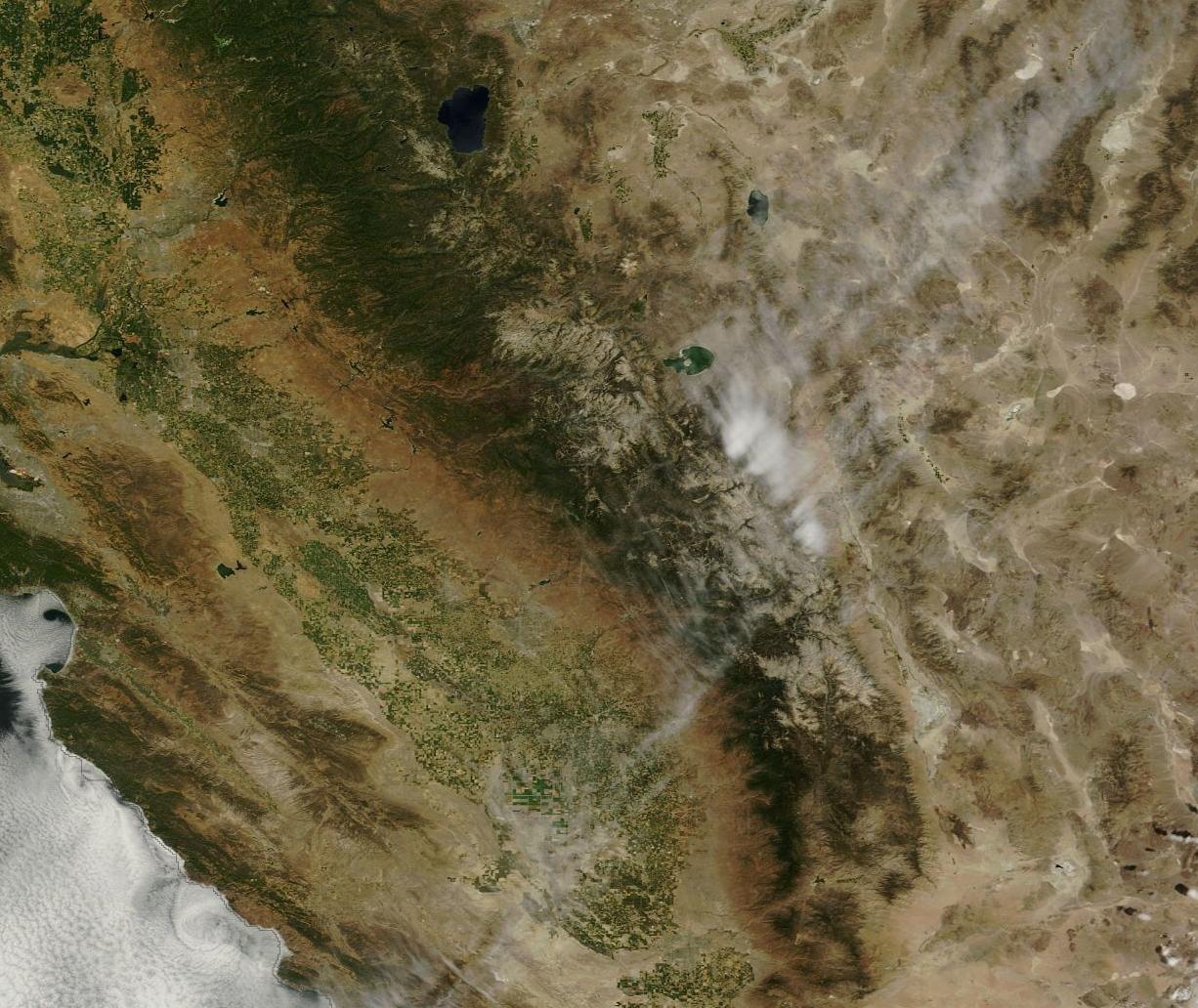
(A Sierra Nevada mountain range featuring glaciers turned brown and sweltering under temperatures as high as 70 degrees on July 25, 2014. For 2013 to 2014, the Sierra Nevadas have been mostly devoid of the reservoir-restoring snows that California typically relies upon. Image source: LANCE-MODIS.)
This more rapid heating of the far north has also resulted in a reduction of the north-south temperature differential. In the past, a high difference in temperature from north to south helped drive a prevailing wind pattern called the Jet Stream which kept weather systems moving across the Northern Hemisphere. But as the difference between north and south temperatures dropped, weather systems tended to stall. High amplitude waves tended to form in the Jet Stream and blocking patterns tended to emerge more often.
For California, the upshot has been the increasing prevalence of a ridge and blocking high pressure system deflecting storms away from the California coast. The pattern, which began to take hold three years ago, has been an almost constant feature for the past 16 months. And the result has been one of the worst droughts California has ever seen.
In May, a new scientific study linked the anomalous blocking pattern, the California Drought and human caused climate change stating:
The 2013–2014 California drought was initiated by an anomalous high-amplitude ridge system. The anomalous ridge was investigated using reanalysis data and the Community Earth System Model (CESM). It was found that the ridge emerged from continual sources of Rossby wave energy in the western North Pacific starting in late summer and subsequently intensified into winter. The ridge generated a surge of wave energy downwind and deepened further the trough over the northeast U.S., forming a dipole. The dipole and associated circulation pattern is not linked directly with either El Niño–Southern Oscillation (ENSO) or Pacific Decadal Oscillation; instead, it is correlated with a type of ENSO precursor. The connection between the dipole and ENSO precursor has become stronger since the 1970s, and this is attributed to increased greenhouse gas loading as simulated by the CESM. (emphasis added)
This climate change induced blocking pattern has also been associated with numerous warm air invasions of the Northern Hemisphere polar region,the most recent of which occurred yesterday.
Models Show Worsening Drought Conditions Under Human-Caused Climate Change
Unfortunately for California, the US Southwest, and for a growing portion of the country, the most recent drought may be just one in a string of many increasingly worsening events to come. Climate models predict a wholesale drying out of the US Southwest and Central US under an intensifying regime that has already begun to take hold. By mid-century conditions are expected to be quite extreme indeed:
Advance of drought
(NCAR model study of global precipitation under moderate warming throughout the 21st Century. The scale is based on the Palmer Drought Severity index with values of -4 and lower at exceptional drought. Under this model run, most of the US is blanketed by exceptional drought conditions. Overall, drought is expected to originate in the south and central US and then expand north and eastward as human caused warming intensifies.)
For Californians suffering under a three year long drought, such long-range forecasts indicate that the worst may be yet to come. For the short-to-middle-term, the west coast blocking pattern remains in place and shows little sign of movement. For the long-term, unless human greenhouse gas emissions are rapidly reduced, droughts of this intensity grow more and more likely.
But Californians are not alone, as model predictions show most of the US coming under an increasing regime of drought as human-caused warming intensifies throughout the 21st Century. Drought emerging now in the US Southwest is expected to expand north and eastward, eventually taking root and reaching an extreme intensity in the Central US. The front of drought then rides into the US Southeast and Mid-Atlantic as, by mid-to-late century, it surges northward into Canada.
The lesson to take from this is that few in the US are spared a fate of worsening drought spurred by human-caused climate change. And with climate change clearly linked to the California drought, we may be getting a bit of the bitter taste of what's still to come.
Links:


Labels: , , , , ,