Tuesday, April 15, 2014


"At night we ride through mansions of glory
 in suicide machines"
   - Bruce Springsteen (Born to Run)


Greetings

      I suppose its only natural that thinking about resource limits and climate weirding would make me think about beer and wine.    

    Mostly about yeast 

      Any of you whole has the pleasure of making your own beer or wine know, that our friends the yeasts work hard to turn sugar into alcohol.  The multiply like crazy, until they hit "peak yeast", then they go to works converting the sugars, and a week or so later, presto.  

       In beer, the yeast hit a resource limit  (no more sugar), and quit.  Happily for them, they are still in a benign environment, so they survive, albeit in a "resting state".  With wine, the yeast create a situation in which even they cannot survive.  Alcohol levels get to be too high..  They created their own toxic environment. 

      We humans are using up the resources as fast as we can.   "Peak humans" is probably not that far away.   According to the "Reference run" on World 3 , peak humans occurs around 2030 at around 7 billion.  It is preceded by "peak food" when appears to peak around 2015. 

     One wonders whether we will leave behind a toxic environment.   .   

-------
     
    Here's an article on farmers in California, buying up well drilling equipment in the race for groundwater.  Well Drilling Boom

"Smittcamp said he worries that so much drilling could cause underground water supplies to run dry in little more than a decade. He blames politicians for failing to give farmers any other options, leaving them to fend for themselves.
This summer, Smittcamp said he has to come up with two-thirds of his water that would normally come from the state and federal water deliveries.
"This year, we get none out of the projects," he said. "So we've got to pump the whole enchilada."
-----

Speaking of food He's some interesting stats on food production in Russia and Ukraine.   

Ukraine currently stands as the 6th largest wheat exporter. Total production was about 16 million tons during 2012 putting it in the 11th largest producer spot worldwide. Over a four year period, from 2009 to 2012, production had remained about level, fluctuating between about 16 and 22 million metric tons. Although, it’s worth noting that drought years 2010 and 2012 were both 16 million ton years respectively.
Russia, on the other hand, has seen steadily declining grain production over the period. Wheat production in 2009 was 61 million metric tons while wheat production in 2012 had fallen to 38 million metric tons. From 2010 to 2012, Russia experienced a series of extreme heat and fire seasons that disrupted food production, ruining large swaths of farmlands.
Note that the 2010 Russian wheat disruption occurred during an el Nino.  World Meteorological Organization now predicts an El Nino for 2014

--------

World Food Security Slides into Red Zone as FAO Index Jumps to 213, Russian Special Forces Continue to Destabilize Breadbasket Ukraine, and Climate-Change Induced Extreme Weather Ravages Croplands

Feeling impacts from a broad range of stresses including widespread heat and drought from the US West, to South America, to Australia and Southeast Asia, the ongoing Russian invasion and destabilization of breadbasket Ukraine, and the growing threat of a strong El Nino emerging in the Pacific, world food prices made another significant jump during March of 2014.
According to the UN Food and Agriculture Organization (FAO), global food index prices surged from a value of 208 in February to 212.8 in March. The 4.8 point increase from February to March followed on the heels of a 5.5 point increase between January and February.
Values above 210 are considered to result in enough stress to ignite conflict as an increasing number of regions begin to see scarcity from lack of ability to purchase or produce food. For the time being, these prices remain below the 2011 high water mark of 229 which was linked to a broad eruption of conflict and food riots from Libya to Egypt to Syria and throughout a smattering of other impoverished or vulnerable regions in Asia and around the globe.
But with the world climate situation worsening, with chances for a strong El Nino emerging later this year increasing, and with global conflict over dwindling and endangered stores of food-related wealth and resources intensifying, there remains a substantial risk that global food prices will continue to see strong upward pressure throughout 2014, pushing and maintaining levels high enough to continue to ignite instability, unrest and, in some cases, open warfare.
(The first episode of Showtime’s “Years of Living Dangerously” provides a close look at two regions suffering directly from crop losses, economic impacts and hunger due to extreme droughts related to climate change — Syria and the US Southwest. It provides a view, in close-up of what happens due to years-long droughts and related food and resource shortages. In the US, loss of grazing land resulted in the closing of meat packing plants supporting local workers and in severe stress to communities even as religion and political beliefs impeded an effective response to the rising crisis. In Syria, a ten year drought spurred armed revolution against a government that turned a blind eye to the needs of its suffering citizens.)
Global Hot Spots
Western US: March saw a brief weakening of the, now 13 month long, blocking high pressure system off the US west coast. This slight interlude unleashed an extraordinary surge of Pacific Ocean moisture that set off record floods and one-day rainfall events throughout Northern California, Washington and Oregon. Pulses of moisture did briefly touch the US Southwest, but the Jet Stream configuration had shifted somewhat northward, resulting in less water relief for the most drought stressed zones.
April-8-2014-US-Drought-Monitor-Map
(The April 8 US Drought Monitor shows drought continuing to intensify over the US despite some moisture reaching affected areas.)
As a result, the epic California drought is probably still the worst seen in 500 years and is now likely to intensify and/or persist on into late this fall. By April 1, snow cover had fallen to 25% of a typical average for the Sierra Nevada. Combined drought and water shortages have led to an unprecedented complete cut off of federal water supplies to many local farmers. In addition, Silicon Valley, has been forced to ration its drinking water supply.
Meanwhile, sections of Texas have experienced their driest 42 month period since record-keeping began in 1911. Regions near Lubbock received only 33 inches of rainfall in the three and a half year period since October of 2010. A normal rainfall for this zone would be around 64 inches for the same time-frame. This makes the current 4+ year Texas drought worse than any previous dry time during the 20th Century, including the Dust Bowl period of the 1930s.
With the emergence of spring, a typical post-winter dry period will likely be enhanced by a continued formation of a powerful dome high pressure system blocking moisture flow to California and the US Southwest. In addition, amplified heat in the up-slope of a high amplitude Jet Stream wave will likely drive drought conditions to rapidly worsen as spring runs into summer. Sadly, the primary hope for moisture comes from the emergence of El Nino, which is becoming more and more likely for later this year. However, if the El Nino comes on as strong as expected, rainfall events are likely to be extraordinarily intense, ripping away top soil from the likely fire-damaged zones and making it difficult for water planners to capture and store water due to its velocity. In the worst case, Ark Storm-like conditions could emerge due to a massive heat and moisture dump that could result in very intense rivers of moisture forming over western regions.
Brazil: Ever since 2005, Brazil has been suffering from a series of persistent drought episodes. By this year, the nine year long drought series reached an ominous peak. Like California, this drought series is now likely the worst seen in decades and possibly as far back as 500 years. The result was widespread fires and blackouts throughout Brazil together with extreme impacts to farm production. Particularly hard hit were coffee and sugar production, sending prices for both markets rocketing to record or near-record levels.
Brazil Drought Rainfall Anomalies
(South American rainfall anomalies from Jan 23 to February 24, 2014. Image source: CPC Unified.)
Indonesia and Southeast Asia: From Thailand to Malaysia to Indonesia, drought resulted in significant reductions in palm oil production, a main crop for the region. Throughout March and into April large fires were reported over a wide drought-stricken zone even as smoke choked both cities and countryside. Some of the fires were suspected to have been illegally set by large palm oil conglomerates seeking to clear new land for an ever-expanding set of palm oil plantations. But the plantations may now be in danger of a drought fed by both their destructive practices of land-clearing and by their overall contribution to an extraordinary and excessive global greenhouse gas overburden.
Fires Malacca Strait 2014
(MODIS shot of widespread fires near the Malacca Strait during March of 2014. Image source:LANCE-MODIS.)
Drought related heat and fires not only threatened crops but also resulted in multiple school closings, numerous dangerous air warnings, thousands of calls reporting peat fires and, in Indonesia alone, more than 20,000 people hospitalized for respiratory problems.
The Ukraine and Russia: An ever-more expansionist Russia’s invasion of the Ukraine also resulted in higher food prices as speculators purchased grain stores over projections that Russian forces could disrupt Urkaine’s food production and exports. First phase invasion into the Crimea did not block key grain ports. But tens of thousands of troops massed along the Ukraine border and likely continued incursions by Russian special forces units into Eastern Ukraine resulted in an ongoing destabilization of one of the world’s key grain producers.
In this context, it is worth noting that global harvest figures showed Russian wheat production falling from 61 million metric tons per year in 2009 to 38 million metric ton per year in 2012. Throughout this four-year period, Russia has been forced to curtail or cut off grain exports on numerous occasions as increasing periods of drought, fire and extreme weather resulted in loss of crops.
Meanwhile, wildfire season began early in Siberian Russia perhaps presaging a fire season that, when combined with the effects of an emerging El Nino, could be the worst seen since 2010 when Russia first cut off grain exports to the rest of the world.
Global Problem: Though the above list provides examples of where global food supply is most threatened by extreme weather related to climate change and/or a related set of conflicts over resources, it is important to note that the current food, resource, and climate crisis is now global in nature. Droughts and severe weather have left almost no region untouched and now result in substantial damage to crops at least once a year in even the most tranquil locations. Instances of ongoing and systemic drought are now common throughout various areas not mentioned above including: Australia, China, South America, Central America, The Middle East, Africa, India, and sections of Russia and Europe. So though blows to important “bread baskets” provide the most impact to overall food price and availability, a general state of agricultural disruption due to increasingly extreme climates blanketing the globe result in a far more challenging than usual base-line for food producers and consumers everywhere.
Links:

Labels: , , , , , , ,

Tuesday, March 4, 2014

Ukraine girls really knock me out


Send lawyers guns and money
the shit has hit the fan
-Warren Zevon


Greetings


   There are lots of interesting aspects to the Ukraine situation. What role did the US play in the protests which led to the current situation?   or here How much does the Ukraine owe Gazprom for natural gas?  Can Europe really afford to impose economic sanctions and risk loosing natural gas?

   But perhaps it makes sense to stand back and look at the bigger picture.   Since 2008, there have been a number of revolts, coups, and counter coups.   Perhaps Ukraine is an example of a more general issue.  One that is shared by Venezuala?     How about Yemen?

       Does it have any relationship to the rising cost of food?  or fuel?

------

Global riot epidemic due to demise of cheap fossil fuels

From South America to South Asia, a new age of unrest is in full swing as industrial civilisation transitions to post-carbon reality.l
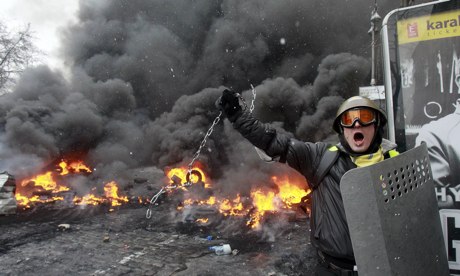
A pro-European protester swings a metal chain during riots in Kiev
A protester in Ukraine swings a metal chain during clashes - a taste of things to come? Photograph: Gleb Garanich/Reuters
If anyone had hoped that the Arab Spring and Occupy protests a few years back were one-off episodes that would soon give way to more stability, they have another thing coming. The hope was that ongoing economic recovery would return to pre-crash levels of growth, alleviating the grievances fueling the fires of civil unrest, stoked by years of recession.
But this hasn't happened. And it won't.
Instead the post-2008 crash era, including 2013 and early 2014, has seen a persistence and proliferation of civil unrest on a scale that has never been seen before in human history. This month alone has seen riots kick-off in Venezuela, Bosnia, Ukraine, Iceland, and Thailand.
This is not a coincidence. The riots are of course rooted in common, regressive economic forces playing out across every continent of the planet - but those forces themselves are symptomatic of a deeper, protracted process of global system failure as we transition from the old industrial era of dirty fossil fuels, towards something else.
Even before the Arab Spring erupted in Tunisia in December 2010, analysts at the New England Complex Systems Institute warned of thedanger of civil unrest due to escalating food prices. If the Food & Agricultural Organisation (FAO) food price index rises above 210, they warned, it could trigger riots across large areas of the world.

Hunger games

The pattern is clear. Food price spikes in 2008 coincided with the eruption of social unrest in Tunisia, Egypt, Yemen, Somalia, Cameroon, Mozambique, Sudan, Haiti, and India, among others.
In 2011, the price spikes preceded social unrest across the Middle East and North Africa - Egypt, Syria, Iraq, Oman, Saudi Arabia, Bahrain, Libya, Uganda, Mauritania, Algeria, and so on.
Last year saw food prices reach their third highest year on record, corresponding to the latest outbreaks of street violence and protests in Argentina, Brazil, Bangladesh, China, Kyrgyzstan, Turkey and elsewhere.
Since about a decade ago, the FAO food price index has more than doubled from 91.1 in 2000 to an average of 209.8 in 2013. As Prof Yaneer Bar-Yam, founding president of the Complex Systems Institute, told Vice magazine last week:
"Our analysis says that 210 on the FAO index is the boiling point and we have been hovering there for the past 18 months... In some of the cases the link is more explicit, in others, given that we are at the boiling point, anything will trigger unrest."
But Bar-Yam's analysis of the causes of the global food crisis don't go deep enough - he focuses on the impact of farmland being used for biofuels, and excessive financial speculation on food commodities. But these factors barely scratch the surface.

It's a gas

The recent cases illustrate not just an explicit link between civil unrest and an increasingly volatile global food system, but also the root of this problem in the increasing unsustainability of our chronic civilisational addiction to fossil fuels.
In Ukraine, previous food price shocks have impacted negatively on the country's grain exports, contributing to intensifying urban poverty in particular. Accelerating levels of domestic inflation are underestimated inofficial statistics - Ukrainians spend on average as much as 75% on household bills, and more than half their incomes on necessities such as food and non-alcoholic drinks, and as75% on household bills. Similarly, for most of last year, Venezuela suffered from ongoing food shortages driven by policy mismanagement along with 17 year record-high inflation due mostly to rising food prices.
While dependence on increasingly expensive food imports plays a role here, at the heart of both countries is a deepening energy crisis. Ukraine is a net energy importer, having peaked in oil and gas production way back in 1976. Despite excitement about domestic shale potential, Ukraine's oil production has declined by over 60% over the last twenty years driven by both geological challenges and dearth of investment.
Currently, about 80% of Ukraine's oil, and 80% of its gas, is imported from Russia. But over half of Ukraine's energy consumption is sustained by gas. Russian natural gas prices have nearly quadrupled since 2004. The rocketing energy prices underpin the inflation that is driving excruciating poverty rates for average Ukranians, exacerbating social, ethnic, political and class divisions.
The Ukrainian government's recent decision to dramatically slash Russian gas imports will likely worsen this as alternative cheaper energy sources are in short supply. Hopes that domestic energy sources might save the day are slim - apart from the fact that shale cannot solve the prospect of expensive liquid fuels, nuclear will not help either. A leaked European Bank for Reconstruction and Development (EBRD) report reveals that proposals to loan 300 million Euros to renovate Ukraine's ageing infrastructure of 15 state-owned nuclear reactors will gradually double already debilitating electricity prices by 2020.

"Socialism" or Soc-oil-ism?

In Venezuela, the story is familiar. Previously, the Oil and Gas Journal reported the country's oil reserves were 99.4 billion barrels. As of 2011, this was revised upwards to a mammoth 211 billion barrels of proven oil reserves, and more recently by the US Geological Survey to a whopping 513 billion barrels. The massive boost came from the discovery of reserves of extra heavy oil in the Orinoco belt.
The huge associated costs of production and refining this heavy oil compared to cheaper conventional oil, however, mean the new finds have contributed little to Venezuela's escalating energy and economic challenges. Venezuela's oil production peaked around 1999, and has declined by a quarter since then. Its gas production peaked around 2001, and has declined by about a third.
Simultaneously, as domestic oil consumption has steadily increased - in fact almost doubling since 1990 - this has eaten further into declining production, resulting in net oil exports plummeting by nearly half since 1996. As oil represents 95% of export earnings and about half of budget revenues, this decline has massively reduced the scope to sustain government social programmes, including critical subsidies.

Looming pandemic?

These local conditions are being exacerbated by global structural realities. Record high global food prices impinge on these local conditions and push them over the edge. But the food price hikes, in turn, are symptomatic of a range of overlapping problems. Global agriculture's excessive dependence on fossil fuel inputs means food prices are invariably linked to oil price spikes. Naturally, biofuels and food commodity speculation pushes prices up even further - elite financiers alone benefit from this while working people from middle to lower classes bear the brunt.
Of course, the elephant in the room is climate change. According to Japanese media, a leaked draft of the UN Intergovernmental Panel onClimate Change's (IPCC) second major report warned that while demand for food will rise by 14%, global crop production will drop by 2% per decade due to current levels of global warming, and wreak $1.45 trillion of economic damage by the end of the century. The scenario is based on a projected rise of 2.5 degrees Celsius.
This is likely to be a very conservative estimate. Considering that the current trajectory of industrial agriculture is already seeing yield plateaus in major food basket regions, the interaction of environmental, energy, and economic crises suggests that business-as-usual won't work.
The epidemic of global riots is symptomatic of global system failure - a civilisational form that has outlasted its usefulness. We need a new paradigm.
Unfortunately, simply taking to the streets isn't the answer. What is needed is a meaningful vision for civilisational transition - backed up with people power and ethical consistence.
It's time that governments, corporations and the public alike woke up to the fact that we are fast entering a new post-carbon era, and that the quicker we adapt to it, the far better our chances of successfully redefining a new form of civilisation - a new form of prosperity - that is capable of living in harmony with the Earth system.
But if we continue to make like ostriches, we'll only have ourselves to blame when the epidemic becomes a pandemic at our doorsteps.
Dr Nafeez Ahmed is executive director of the Institute for Policy Research & Development and author of A User's Guide to the Crisis of Civilisation: And How to Save It among other books. Follow him on Twitter @nafeezahmed

Labels: ,