Thursday, April 17, 2014

IPCC Plan B - Suck It Up


Smoke in the water
Fire in the sky
   -Deep Purple

They're trying to wash us away
 -Randy Newman (Louisiana)


Greetings 

      Here's a twist.  We're shooting for "under 450".   But it that doesn't work., may be we could overshoot it by a bit, and then  go "carbon negative" for a while, and get back to 450.

    How to go "carbon negative"  -   Good old CCS - Carbon capture and Storage.   Or the bio-fuels version  - BECCS.   Se  New Scientist article (below)

    Sounds pretty good?

    Maybe not.  Nafeez Ahmed suggests that the idea is not well thought out.

Dr Smolker of Biofuelwatch, in contrast, said that the IPCC's central emphasis on biofuels with carbon capture is a "dangerous distraction" from the task of "deeply altering our entire relationship to energy consumption." She highlighted an unwillingness to recognize the "fundamental link between 'endless growth economics' and ecological destruction."


"The underlying assumption appears to be that business as usual [BAU] economic growth must be sustained, and industry and corporate profits must be protected and maintained. But if we focus on 'BAU economics', seeking and accepting only bargain basement options for addressing global warming - the costs will be far more severe."  


------
No option left but to suck CO2 out of air, says IPCC

16:47 14 April 2014 by Fred Pearce
For similar stories, visit the Climate Change Topic Guide

It is a beguiling idea: grow crops that suck carbon dioxide from the air, burn them to generate electricity, then bury the resulting CO2. The result? Less CO2 in the air, and less climate change.

This idea's time has come. The new report of the Intergovernmental Panel on Climate Change (IPCC), published on Sunday in Berlin, Germany, says "widespread" use of bioenergy with carbon capture and storage (BECCS) will probably be needed to stop the world warming by 2 °C, the politically agreed danger threshold.

That reflects the urgency of the situation. After 20 years of talk, the world is still accelerating towards climate catastrophe. Emissions grew faster between 2000 and 2010 than in each of the three previous decades.

The IPCC blames economic growth, which now adds twice as much to emissions as population growth does. (The report does not cover the years since 2010, when emissions may have risen more slowly despite continued economic growth.)

The heart of the report is a study of over 1000 scenarios of possible energy and climate futures. It lays out what scientists believe it will take to keep global warming below 2 °C this century. Achieving a better-than-even chance will probably mean at least tripling the proportion of energy coming from low-carbon sources, it says.

The key is to generate electricity without emitting CO2. Low-carbon sources currently provide 30 per cent of electricity, mostly from dams and nuclear power. That must rise to 80 per cent by 2050, with solar panels and wind turbines coming to the fore. New forms of solar will also play a role .

"Mitigation does not mean the world has to sacrifice economic growth," saysOttmar Edenhofer of the Potsdam Institute for Climate Impact Research in Germany, who co-chaired the report. But the burning of fossil fuel must virtually end by 2100, unless the emissions are buried using carbon capture and storage(CCS).

The report is neutral about nuclear power because of issues with nuclear waste, safety, proliferation and public image. But it does support natural gas as a "bridge technology" to replace coal until renewables take over or CCS becomes widespread.

Other cost-effective changes cited in the report include massive boosts to energy efficiency in industry and home heating, and reducing transport emissions through more efficient vehicles, more compact cities and more high-speed rail to cut air miles.

That's the right idea, says Brian Hoskins of the Grantham Institute for Climate Change in London. "We already have the technologies," he says. "We should stop wringing our hands and just get on with it."

Keeping below a 2 °C rise probably means keeping CO2 concentrations in the air below 450 parts per million. We are already up from a pre-industrial 280 ppm to400 ppm. Most scenarios the IPCC examined overshot 450 ppm and required recovery through "negative emissions" – BECCS, or some other CO2-sucking technology – later this century. CCS could be risky, but we may have no choice, the IPCC says.

The report should galvanise the UN negotiators who are drafting a global climate deal to be signed next year. But the hottest topic from the report may be its backing for negative emissions and CCS. It was published in Germany, a country with geology, climate policies and skills that make it an ideal test bed for the technology (see "German energy crisis points towards climate solution"). But the German public hates CCS. Last week Jochen Flasbarth, state secretary at Germany's federal environment ministry, told New Scientist that buried CO2 is seen as almost as bad as nuclear waste.

Read more: Climate report 2014: Your guide to the big questions

Labels: , , ,

Sunday, March 16, 2014

I'll fly away

And I feel fine

     REM

Fall mountains fall
Just don't fall on me

     Hendrix
------

Greetings

     The other day I had a conversation with a fellow peakster, and we wondered about the psychology of the elites. The other day,  25 Senators stood up and  75 didn't.    What are the other Senators thinking?   Surely they can see the reality of of climate change and resource limits.  What's their plan for the kids and grandkids?     How will this play out?   Perhaps there is an answer in the science of collapse. 

      The "science" of collapse is still pretty primitive.  But here is a modeling exercise that gets us one step closer.  Most of us are familiar with the idea that some societies grow and flourish, until they have resource problems, and  have troubles with either sources or sinks.  Limits to Growth modelling deals with this sort of approach

      But what effect does income inequality have on the process?     Here is  modelling exercise that tries to incorporates the impact of the 'Elites".  They find :

"In sum, results of our experiments, discussed in section 6, indicate that either one of the two features apparent in historical societal collapses (over-exploitation of natural resources and strong economic strati fication) can independently result in a complete collapse. Given economic stratifi cation, collapse is very diffi cult to avoid and requires major policy changes, including major reductions in inequality and population growth rates. Even in the absence of economic strati cation,collapse can still occur if depletion per capita is too high. However, collapse can be avoided and population can reach equilibrium if the per capita rate of depletion of nature is reduced to a sustainable level, and if resources are distributed in a reasonably equitable fashion."

   The elites act as a sort of accelerant.   They drive society past the carrying capacity into collapse.   Being buffered by their wealth, they are not  sensitive to the situation.  They last longer than the rest, but also fall.

 The authors note:

"It is important to note that in both of these scenarios, the Elites ,due to their wealth, 
do not suff er the detrimental eff ects of the environmental collapse until much later than the Commoners.
We could posit that this buff er of wealth, as well as the initial apparently sustainable
trajectory, allows Elites to continue "business as usual" despite the impending catastrophe. It is
likely that this is an important mechanism that would help explain how historical collapses were
allowed to occur by seemingly oblivious elites (most clearly apparent in the Roman and Mayan
cases)..    

    Let's look at the current situation.  Thanks to globalization, it probably makes sense to treat the world as one unit.   Oxfam just published a report on global inequality summarized here.  Here's one tidbit: 


 "Our estimates suggest that the lower half of the global population possesses barely 1% of global wealth, while the richest 10% **of adults own 86% of all wealth, and the top 1% ** account for 46% of the total. "

--------
** ( Assets of more than $75,000 put you in the top 10 percent. Assets of more than $753,000 put you in the top 1 percent.)  
--------------


  So, what about those Senators?  Where do they fit in?  The average (median) wealth for US Senators is about $2.5 million, for representatives about $600 thousand.  open secrets

Below  Nafeez Ahmed's suggests that collapse is not too far off.  He suggest that 15 years is optimistic.   He reviews a later version of this study (which hasn't been published yet)

-------
http://www.theguardian.com/environment/earth-insight/2014/mar/14/nasa-civilisation-irreversible-collapse-study-scientists

Nasa-funded study: industrial civilisation headed for 'irreversible collapse'?

Natural and social scientists develop new model of how 'perfect storm' of crises could unravel global system
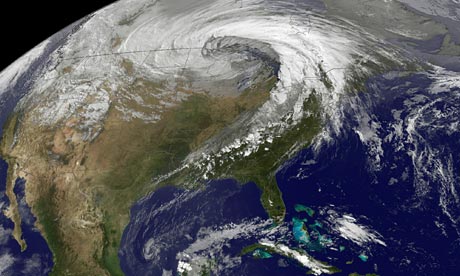
This NASA Earth Observatory released on
This Nasa Earth Observatory image shows a storm system circling around an area of extreme low pressure in 2010, which many scientists attribute to climate change. Photograph: AFP/Getty Images
A new study sponsored by Nasa's Goddard Space Flight Center has highlighted the prospect that global industrial civilisation could collapse in coming decades due to unsustainable resource exploitation and increasingly unequal wealth distribution.
Noting that warnings of 'collapse' are often seen to be fringe or controversial, the study attempts to make sense of compelling historical data showing that "the process of rise-and-collapse is actually a recurrent cycle found throughout history." Cases of severe civilisational disruption due to "precipitous collapse - often lasting centuries - have been quite common."
The research project is based on a new cross-disciplinary 'Human And Nature DYnamical' (HANDY) model, led by applied mathematician Safa Motesharri of the US National Science Foundation-supported National Socio-Environmental Synthesis Center, in association with a team of natural and social scientists. The study based on the HANDY model has been accepted for publication in the peer-reviewed Elsevier journal, Ecological Economics.
It finds that according to the historical record even advanced, complex civilisations are susceptible to collapse, raising questions about the sustainability of modern civilisation:
"The fall of the Roman Empire, and the equally (if not more) advanced Han, Mauryan, and Gupta Empires, as well as so many advanced Mesopotamian Empires, are all testimony to the fact that advanced, sophisticated, complex, and creative civilizations can be both fragile and impermanent."
By investigating the human-nature dynamics of these past cases of collapse, the project identifies the most salient interrelated factors which explain civilisational decline, and which may help determine the risk of collapse today: namely, Population, Climate, Water, Agriculture, andEnergy.
These factors can lead to collapse when they converge to generate two crucial social features: "the stretching of resources due to the strain placed on the ecological carrying capacity"; and "the economic stratification of society into Elites [rich] and Masses (or "Commoners") [poor]" These social phenomena have played "a central role in the character or in the process of the collapse," in all such cases over "the last five thousand years."
Currently, high levels of economic stratification are linked directly to overconsumption of resources, with "Elites" based largely in industrialised countries responsible for both:
"... accumulated surplus is not evenly distributed throughout society, but rather has been controlled by an elite. The mass of the population, while producing the wealth, is only allocated a small portion of it by elites, usually at or just above subsistence levels."
The study challenges those who argue that technology will resolve these challenges by increasing efficiency:
"Technological change can raise the efficiency of resource use, but it also tends to raise both per capita resource consumption and the scale of resource extraction, so that, absent policy effects, the increases in consumption often compensate for the increased efficiency of resource use."
Productivity increases in agriculture and industry over the last two centuries has come from "increased (rather than decreased) resource throughput," despite dramatic efficiency gains over the same period.
Modelling a range of different scenarios, Motesharri and his colleagues conclude that under conditions "closely reflecting the reality of the world today... we find that collapse is difficult to avoid." In the first of these scenarios, civilisation:
".... appears to be on a sustainable path for quite a long time, but even using an optimal depletion rate and starting with a very small number of Elites, the Elites eventually consume too much, resulting in a famine among Commoners that eventually causes the collapse of society. It is important to note that this Type-L collapse is due to an inequality-induced famine that causes a loss of workers, rather than a collapse of Nature."
Another scenario focuses on the role of continued resource exploitation, finding that "with a larger depletion rate, the decline of the Commoners occurs faster, while the Elites are still thriving, but eventually the Commoners collapse completely, followed by the Elites."
In both scenarios, Elite wealth monopolies mean that they are buffered from the most "detrimental effects of the environmental collapse until much later than the Commoners", allowing them to "continue 'business as usual' despite the impending catastrophe." The same mechanism, they argue, could explain how "historical collapses were allowed to occur by elites who appear to be oblivious to the catastrophic trajectory (most clearly apparent in the Roman and Mayan cases)."
Applying this lesson to our contemporary predicament, the study warns that:
"While some members of society might raise the alarm that the system is moving towards an impending collapse and therefore advocate structural changes to society in order to avoid it, Elites and their supporters, who opposed making these changes, could point to the long sustainable trajectory 'so far' in support of doing nothing."
However, the scientists point out that the worst-case scenarios are by no means inevitable, and suggest that appropriate policy and structural changes could avoid collapse, if not pave the way toward a more stable civilisation.
The two key solutions are to reduce economic inequality so as to ensure fairer distribution of resources, and to dramatically reduce resource consumption by relying on less intensive renewable resources and reducing population growth:
"Collapse can be avoided and population can reach equilibrium if the per capita rate of depletion of nature is reduced to a sustainable level, and if resources are distributed in a reasonably equitable fashion."
The NASA-funded HANDY model offers a highly credible wake-up call to governments, corporations and business - and consumers - to recognise that 'business as usual' cannot be sustained, and that policy and structural changes are required immediately.
Although the study is largely theoretical, a number of other more empirically-focused studies - by KPMG and the UK Government Office of Science for instance - have warned that the convergence of food, water and energy crises could create a 'perfect storm' within about fifteen years. But these 'business as usual' forecasts could be very conservative.
Dr Nafeez Ahmed is executive director of the Institute for Policy Research & Development and author of A User's Guide to the Crisis of Civilisation: And How to Save It among other books. Follow him on Twitter @nafeezahmed

Labels: , , ,

Wednesday, September 11, 2013

Methane Bomb - Round II


Greetings

   I've got to hand it to Nafeez Ahmed at the Gurdian.  He is really giving the whole question of arctric methane the airing that it deserves.

    Perhaps its nothing to worry about.  But if that can be demonstrated, let's do so.  Otherwise, better take it seriously.

   I am not in a position to evaluate the details of the argument.  But this caught my eye

      "...NASA Arctic specialists say Arctic methane levels are "amazing" and "potentially troubling", outside the range of most model predictions, and possibly indicative that "an irreversible permafrost tipping point" is near..."


----------------------
About a week ago, climate scientist Michael Tobis wrote a critique of my 'Seven facts about the Arctic methane time bomb' following a twitter exchange with him and Chris Colose, author of an article at Skeptical Science arguing that the core scenario of a new Nature paper by Gail Whiteman et. al on the economic costs of Arctic climate change is extremely unlikely.
Much of this debate kicked off because the said Nature paper advances a hypothetical scenario for an abrupt Arctic methane release over either a decade or several decades of about 50 gigatonnes (Gt), and argues specifically that such a scenario is "likely." My own attempt to understand the literature convinced me that the scenario should be viewed as a serious possibility.
Tobis on the other hand is the latest amongst several scientists offering scathing criticisms of that scenario, which in his own words is "as close to impossible as anything in earth science; actual geophysics refutes it."
He begins with my first point, 1. The 50 Gigatonne decadal methane pulse scenario was posited by four Arctic specialists, and is considered plausible by Met Office scientists.
Tobis writes that the Review of Geophysics paper I cite says
"Arctic thawing may release in excess of 50 GT of C [Carbon], a very serious matter... But Ahmed refers to the paper in support of a very different assertion, that 50 GT of methane would be released... But the paper to which he points says nothing of the sort. I conclude that he doesn't really know what he is talking about. Specifically he has already shown that he is confused about the distinction between methane releases and CO2 releases."
However, the carbon release scenarios from permafrost explored by the paper include both methane and carbon. Here's what the paper says:
"The most important determinant of whether release of frozen carbon happens as CO2 or CH4 [methane] is whether decomposition proceeds aerobically or anaerobically... In anaerobic conditions, a greater proportion of soil organic carbon decomposition is released as CH4, although not all of it necessarily reaches the atmosphere."
Following this paragraph, the paper cites several scenarios for large-scale releases from permafrost carbon, including the 50-100 Gt carbon release I mentioned.
Further down, the paper continues:
"Thawing of the terrestrial permafrost will result in CO2 and CH4 emissions on time scales of a few decades to several centuries."
So Tobis is wrong in assuming that the carbon release scenarios the paper is discussing are only CO2 - that isn't specified, so I'd assumed the paper was open on whether the 50-100 Gt emissions were methane or carbon.
This was a mistake, however. The paper makes clear that although the scenarios are not clear on the precise quantification of carbon dioxide compared to methane releases from permafrost thawing, methane releases would be only be a small percentage of the overall carbon release scenarios explored. So Tobis is ultimately correct - the paperdoes not back up the specific scenario endorsed as likely by the Nature paper. I stand corrected on that.
Therefore, the plausibility of the specific 50 Gt scenario rises and falls on the credibility of the four Arctic specialists, including Dr. Natalie Shakhova, who came up with the scenario in the first place. That leaves point 1 only half intact, so we're left with:
1. The 50 Gigatonne decadal methane pulse scenario was posited by four Arctic specialists
Tobis unfortunately addresses this with only an ad hominem attack on the expertise of these Arctic specialists:
"Whether we should be acknowledging the 'Arctic specialists' as actually expert is, frankly, the question at hand."
Tobis goes through my other citations of the literature arguing that I am confusing quantities and making unwarranted extrapolations. However, my citations of this literature is simply to clarify that the literature does not rule out potentially dangerous releases of Arctic methane. Does Tobis manage to refute point 2. Arctic methane hydrates are becoming increasingly unstable in the context of anthropogenic climate change and it's impact on diminishing sea ice? No. Arctic methane hydrates are becoming increasingly unstable. I said nothing more, or less, than exactly that.
What about fact 3. Multiple scientific reviews, including one by over 20 Arctic specialists, confirm decadal catastrophic Arctic methane release is plausible?
Tobis concedes "A couple of reviews do give some support to this, but are vague about time scales". He then links to what he describes as a "DOE report". Instead, the link goes through to a Geophysical Research Letters study, which, however, he completely ignores, instead quoting from the original Review of Geophysics paper as follows: "The risk of a rapid increase in [methane] emissions is real but remains largely unquantified..."
And he calls me confused!
He then argues that there is "plenty of room for acceleration without hitting the cataclysmic level. Further evidence doesn't support the immediacy of that scenario at all."
But the Review of Geophysics paper does NOT say that there is "plenty of room for acceleration without hitting the cataclysmic level" - it says that:
"... significant increases in methane emissions are likely, and catastrophic emissions cannot be ruled out."
The paper does NOT say available evidence "doesn't support the immediacy" of a catastrophic scenario, but rather that "uncertainties are large, and it is difficult to be conclusive about the time scales and magnitudes of methane feedbacks."
As for the Geophysical Research Letters study Tobis links to but ignores, it says:
"... while many deep hydrate deposits are indeed stable under the influence of rapid seafloor temperature variations, shallow deposits, such as those found in arctic regions or in the Gulf of Mexico, can undergo rapid dissociation and produce significant carbon fluxes over a period of decades."
I think my fundamental contention - that the scientific literature recognises the possibility of some sort of catastrophic methane scenario - remains valid. Tobis is right, however, to emphasise that there is very little evidence available on quantifying that possibility.
In response to fact 4. Current methane levels are unprecedented, Tobis says yes, but they are "not climbing rapidly", and therefore this is mere "hype." My intention here was not to suggest that current Arctic methane levels are definitive evidence of a catastrophe already underway, but simply to note that it is wrong to say methane levels are NOT rising. They are, and once again, Arctic specialists are concerned.
According to Charles Miller of NASA's new research programme, Carbon in Arctic Reservoirs Vulnerability Experiment (CARVE):
"The CARVE science team is busy analyzing data from its first full year of science flights. What they're finding, Miller said, is both amazing and potentially troubling.
'Some of the methane and carbon dioxide concentrations we've measured have been large, and we're seeing very different patterns from what models suggest," Miller said. "We saw large, regional-scale episodic bursts of higher-than-normal carbon dioxide and methane in interior Alaska and across the North Slope during the spring thaw, and they lasted until after the fall refreeze. To cite another example, in July 2012 we saw methane levels over swamps in the Innoko Wilderness that were 650 parts per billion higher than normal background levels. That's similar to what you might find in a large city.'
"Ultimately, the scientists hope their observations will indicate whether an irreversible permafrost tipping point may be near at hand. While scientists don't yet believe the Arctic has reached that tipping point, no one knows for sure. 'We hope CARVE may be able to find that "smoking gun," if one exists,' Miller said."
So while NASA Arctic specialists say Arctic methane levels are "amazing" and "potentially troubling", outside the range of most model predictions, and possibly indicative that "an irreversible permafrost tipping point" is near - a matter which "no one knows for sure" - Tobis wants to interpret all the evidence as "refuting" any need for concern.
The other problem is that Arctic monitoring is still poor, and might be missing significant methane emissions. As Shakhova and her co-author Igor Semiletov told the New York Times' Andy Revkin:
"It is no surprise to us that others monitoring global methane have not found a signal from the Siberian Arctic or increase in global emissions... The number of stations monitoring atmospheric methane concentrations worldwide is very few. In the Arctic there are only three such stations - Barrow, Alert, Zeppelin - and all are far away from the Siberian Arctic. We are doing our multi-year observations, including year-round monitoring, in proximity to the source. In addition to measuring the amount of methane emitted from the area, we are trying to find out whether there is anything specific about those emissions that could distinguish them from other sources. It is incorrect to say that anyone is able to trace that signal yet."
Most Arctic specialists recognise that there's simply not enough research to justify dismissing the possibility of a catastrophe. That sword cuts both ways, of course - equally, there's not enough research justifying conclusions that we are definitely on the brink of a catastrophe.
On 5. The tipping point for continuous Siberian permafrost thaw could be as low as 1.5C, Tobis concedes this "is on the table", but that "it has nothing to do with undersea methane." Um, I never said it had anything to do with undersea methane.
On 6. Arctic conditions during the Eemian interglacial lasting from 130,000 to 115,000 years ago are a terrible analogy for today's Arctic, he writes: "as a response to Chris Colose" this is a "terrible" response, "because Colose is not relying on the Eemian but on the early Holocene as the analogous period." Yes, Colose does refer to the early Holocene, but he also repeatedly refers to the Eemian, the "Last Interglacial period between 130,000 to 120,000 years ago." In a previous article, I'd already mentioned that in the early Holocene, the East Siberia Arctic Shelf (ESAS) was "not an underwater shelf but a frozen landmass" as reason to be sceptical that paleoclimate data provides a ready analogue for the present.
Tobis then launches an ad hominem attack on climate scientist Paul Beckwith, whom I quoted for this article, and whom Tobis refers to as:
"'Prof' Paul Beckwith, the 'Professor Beckwith' who is a grad student at Ottawa U."
For the record, earlier this year, Beckwith formally passed his PhD examination on abrupt Arctic climate change at the Laboratory for Paleoclimatology and Climatology, University of Ottawa, where he is currently a part-time professor in climatology. Rather than addressing Prof Beckwith's argument, Tobis wants to demean his reputation and ignore his argument (which he fails to refute). Beckwith's full response to Colose is here. Among Beckwith's points, he argues that neither the early Holocene nor Eemian offer good analogues for the present Arctic:
"Earth tilt was larger, so Winter Northern Hemispheric solar radiation was about 40 W/m2 lower than today at 60 degrees North. Thus, the ice formed much more quickly and much thicker in the winter back then. Also, at night much more heat was radiated out to space in the lower GHG world then as compared to our 400 ppm levels today... the summertime Arctic is not believed to be seasonally ice free during these periods. The last time this happened was likely 2 or 3 million years ago... Colder winters in the early Holocene and Last Interglacial and much colder nights (in summers and winters then) meant much thicker and extensive ice formation in winters, and slower melting at night, respectively."
If I was to take Tobis' approach, I could have noted that Chris Colose is a "grad student" at the University of Albany. I didn't, because it's irrelevant.
Finally, Tobis takes on fact 7.Paleoclimate records will not necessarily capture a large, abrupt methane pulse with the following obfuscation: "Now, we swing back to saying that it HAS occurred in the recent geological past, indeed at the time which Colose says is the better analogy."
This is incorrect. Here, I merely point to a paper in Science by Nisbet which argues specifically that the cold Younger Dryas was ended due to methane emissions which came mostly from wetlands, but for which the initial trigger could have been Arctic methane clathrates:

"A possible explanation for the sudden end of the Younger Dryas is that, at a time of high Arctic insolation, an initial outburst of methane - perhaps from a geological source such as methane clathrates - triggered global warming, initiating both strong wetland emission in the tropics and north (8), and further hydrate responses as the thermal shock penetrated the permafrost (9, 10), freeing methane from decomposing clathrate hydrates and releasing gas pools trapped beneath them."
The evidence for this, however, is inconclusive, so the paper concludes: "The jury thus remains out on the initial trigger..."
On the issue of whether paleoclimate records will actually capture a large, abrupt methane pulse such as the scenario proposed by Shakhova et. al, as this paper in Earth and Planetary Science Lettersobserves, "rapid methane perturbations in the atmosphere are strongly smoothed in ice core records" due to "the relatively short atmospheric lifetime of methane." So it is quite possible that an abrupt, catastrophic methane release of the sort Shakhova proposes has happened, but is undetected in ice cores.
Tobis then declares a "scientific consensus has been reached" that Shakhova's scenario is "implausible in the extreme."
But the scientific consensus amongst ESAS experts is quite different, as I'd already noted. A peer-reviewed study by 20 Arctic specialists of ESAS data from 1995-2011, drawing of course also on Shakhova's work, specifically recognises:
"The emission of methane in several areas of the [ESAS] is massive to the extent that growth in the methane concentrations in the atmosphere to values capable of causing a considerable and even catastrophic warning on the Earth is possible."
It seems clear to me that the scientific literature on the danger of an Arctic methane catastrophe recognises the possibility unequivocally, but highlights huge uncertainty in our knowledge of the processes at work. Most of the literature I've been able to find on this subject shows great humility - and while acknowledging the possibility of worst-case scenarios, makes quite clear that the likelihood of those scenarios is very difficult to gauge.
The Nature paper by Whiteman et. al went too far in stating the Shakhova et. al scenario as "likely". But on the other end of the spectrum, in the comments to his own blog, Tobis hints that Shakhova et. al are involved in "junk science" - despite the fact that their papers have been published in peer-reviewed journals (their 50 Gt scenario is discussed in this paper originally published in the Proceedings of the Russian Academy of Sciences), and that their general thesis is taken seriously by the US National Science Foundation.
Tobis also refers to a response to the Whiteman paper submitted to Nature (though not yet published) by Nisbet et. al, which argues that Shakhova's scenario is "improbably large" as there is no evidence for such events during past "glacial/postglacial transitions."
This is certainly a notable contribution to the debate, but if past paleoclimate conditions are not a good analogue for present Arctic conditions - a matter which remains a matter of scientific debate - and if ice cores would not record such a rapid scenario, then the central argument of this paper may be questionable.
Indeed, a 2007 Royal Society paper by NASA scientist Drew Shindell backs this up:
"... the rarity of palaeoclimate evidence for hydrate-induced climate changes argues that this is a fairly unlikely candidate for near-term sudden climate change. Unlike the others, however, anthropogenic climate change may alter the probability of hydrate release when compared with the past, making the overall probability of near-term release extremely difficult to estimate...
Massive methane release by hydrates or from peats also seems to have been extremely rare in the past, but could become more probable in the future world under the influence of anthropogenic forcing. However, at present, it is not possible to judge the probability for such changes reliably."
Shindell's argument offers a warning that lack of past evidence is not a reason for present complacency where anthropogenic forces are changing the climate in ways not necessarily captured by paleoclimate evidence.
So where does this leave us with regard to the risk of abrupt, catastrophic methane releases? As far as I can discern, the literature is largely agnostic about it, emphasises that specific scenarios are difficult to quantify, and calls for further research. The Review of Geophysics paper, for instance, far from asserting that a catastrophic methane release is refuted by geophysical evidence - as Tobis says - concludes:
"A significant increase in CH4 emissions and atmospheric concentrations due to climate change is therefore a possible scenario for the next century. However, uncertainties are very large, and as discussed above, it is difficult to be very conclusive regarding the magnitude of CH4 feedbacks and their time scales."
What about Shakhova et. al's specific scenario of a potential 50 Gt methane release at any time (the basic contours of her argument are outlined here, no paywall)? Shakhova et. al say simply that the scenario should be taken seriously as a possibility underscoring the importance of further ESAS research. The fact that Nature co-author Prof Peter Wadhams, who heads up polar ocean physics at Cambridge, also takes it seriously, is significant. Is Prof Wadhams' expertise also to be attacked? Ultimately, in my view, Tobis fails to show either that this scenario specifically, or abrupt methane catastrophe more generally, are unlikely.
In particular, his claim that there is a scientific consensus demonstrating near impossibility of a risk of a catastrophic methane event strikes me as unsupportable. Disagreement among scientists over the Arctic methane question is real, and it seems clear that Arctic specialists - Shakhova included - largely agree that while catastrophe is possible, more research is needed to discern how likely or unlikely it might be.
While other scientists, many reputable, argue importantly that such scenarios are beyond the pale, to my mind Tobis' egregious ad hominems against Arctic scientists whom he disagrees with have no place in scientific debate.

Labels: , , , ,

Tuesday, September 3, 2013

Oil, Syria, and the "Long War"

Greetings

    As we watch the president beat the drum for action on Syria, one has to wonder "Why?"   Is it a humanitarian gesture?  A message to others who might use such weapons?  Or is their some deeper meaning.

   Anybody remember PNAC?

-------

Syria intervention plan fueled by oil interests, not chemical weapon concern


On 21 August, hundreds - perhaps over a thousand - people were killed in a chemical weapon attack in Ghouta, Damascus, prompting the US, UK, Israel and France to raise the spectre of military strikes against Bashir al Assad's forces.


The latest episode is merely one more horrific event in a conflict that has increasingly taken on genocidal characteristics. The case for action at first glance is indisputable. The UN now confirms a death toll over 100,000 people, the vast majority of whom have been killed by Assad's troops. An estimated 4.5 million people have been displaced from their homes. International observers have overwhelmingly confirmed Assad's complicity in the preponderance of war crimes and crimes against humanity against the Syrian people. The illegitimacy of his regime, and the legitimacy of the uprising, is clear.
Experts are unanimous that the shocking footage of civilians, including children, suffering the effects of some sort of chemical attack, is real - butremain divided on whether it involved military-grade chemical weaponsassociated with Assad's arsenal, or were a more amateur concoction potentially linked to the rebels.
Whatever the case, few recall that US agitation against Syria began long before recent atrocities, in the context of wider operations targeting Iranian influence across the Middle East.
In May 2007, a presidential finding revealed that Bush had authorised CIA operations against Iran. Anti-Syria operations were also in full swing around this time as part of this covert programme, according to Seymour Hersh in the New Yorker. A range of US government and intelligence sources told him that the Bush administration had "cooperated with Saudi Arabia's government, which is Sunni, in clandestine operations" intended to weaken the Shi'ite Hezbollah in Lebanon. "The US has also taken part in clandestine operations aimed at Iran and its ally Syria," wrote Hersh, "a byproduct" of which is "the bolstering of Sunni extremist groups" hostile to the United States and "sympathetic to al-Qaeda." He noted that "the Saudi government, with Washington's approval, would provide funds and logistical aid to weaken the government of President Bashir Assad, of Syria," with a view to pressure him to be "more conciliatory and open to negotiations" with Israel. One faction receiving covert US "political and financial support" through the Saudis was the exiled Syrian Muslim Brotherhood.
According to former French foreign minister Roland Dumas, Britain had planned covert action in Syria as early as 2009: "I was in England two years before the violence in Syria on other business", he told French television:
"I met with top British officials, who confessed to me that they were preparing something in Syria. This was in Britain not in America. Britain was preparing gunmen to invade Syria."
The 2011 uprisings, it would seem - triggered by a confluence of domestic energy shortages and climate-induced droughts which led to massive food price hikes - came at an opportune moment that was quickly exploited. Leaked emails from the private intelligence firm Stratfor including notes from a meeting with Pentagon officials confirmed US-UK training of Syrian opposition forces since 2011 aimed at eliciting "collapse" of Assad's regime "from within."
So what was this unfolding strategy to undermine Syria and Iran all about? According to retired NATO Secretary General Wesley Clark, a memo from the Office of the US Secretary of Defense just a few weeks after 9/11 revealed plans to "attack and destroy the governments in 7 countries in five years", starting with Iraq and moving on to "Syria, Lebanon, Libya, Somalia, Sudan and Iran." In a subsequent interview, Clark argues that this strategy is fundamentally about control of theregion's vast oil and gas resources.
Much of the strategy currently at play was candidly described in a 2008US Army-funded RAND report, Unfolding the Future of the Long War(pdf). The report noted that "the economies of the industrialized states will continue to rely heavily on oil, thus making it a strategically important resource." As most oil will be produced in the Middle East, the US has "motive for maintaining stability in and good relations with Middle Eastern states":
"The geographic area of proven oil reserves coincides with the power base of much of the Salafi-jihadist network. This creates a linkage between oil supplies and the long war that is not easily broken or simply characterized... For the foreseeable future, world oil production growth and total output will be dominated by Persian Gulf resources... The region will therefore remain a strategic priority, and this priority will interact strongly with that of prosecuting the long war."
In this context, the report identified several potential trajectories for regional policy focused on protecting access to Gulf oil supplies, among which the following are most salient:
"Divide and Rule focuses on exploiting fault lines between the various Salafi-jihadist groups to turn them against each other and dissipate their energy on internal conflicts. This strategy relies heavily on covert action, information operations (IO), unconventional warfare, and support to indigenous security forces... the United States and its local allies could use the nationalist jihadists to launch proxy IO campaigns to discredit the transnational jihadists in the eyes of the local populace... US leaders could also choose to capitalize on the 'Sustained Shia-Sunni Conflict' trajectory by taking the side of the conservative Sunni regimes against Shiite empowerment movements in the Muslim world.... possibly supporting authoritative Sunni governments against a continuingly hostile Iran."
Exploring different scenarios for this trajectory, the report speculated that the US may concentrate "on shoring up the traditional Sunni regimes in Saudi Arabia, Egypt, and Pakistan as a way of containing Iranian power and influence in the Middle East and Persian Gulf." Noting that this could actually empower al-Qaeda jihadists, the report concluded that doing so might work in western interests by bogging down jihadi activity with internal sectarian rivalry rather than targeting the US:
"One of the oddities of this long war trajectory is that it may actually reduce the al-Qaeda threat to US interests in the short term. The upsurge in Shia identity and confidence seen here would certainly cause serious concern in the Salafi-jihadist community in the Muslim world, including the senior leadership of al-Qaeda. As a result, it is very likely that al-Qaeda might focus its efforts on targeting Iranian interests throughout the Middle East and Persian Gulf while simultaneously cutting back on anti-American and anti-Western operations."
The RAND document contextualised this disturbing strategy with surprisingly prescient recognition of the increasing vulnerability of the US's key allies and enemies - Saudi Arabia, the Gulf states, Egypt, Syria, Iran - to a range of converging crises: rapidly rising populations, a 'youth bulge', internal economic inequalities, political frustrations, sectarian tensions, and environmentally-linked water shortages, all of which could destabilise these countries from within or exacerbate inter-state conflicts.
The report noted especially that Syria is among several "downstream countries that are becoming increasingly water scarce as their populations grow", increasing a risk of conflict. Thus, although the RAND document fell far short of recognising the prospect of an 'Arab Spring', it illustrates that three years before the 2011 uprisings, US defence officials were alive to the region's growing instabilities, and concerned by the potential consequences for stability of Gulf oil.
These strategic concerns, motivated by fear of expanding Iranian influence, impacted Syria primarily in relation to pipeline geopolitics. In 2009 - the same year former French foreign minister Dumas alleges the British began planning operations in Syria - Assad refused to sign a proposed agreement with Qatar that would run a pipeline from the latter's North field, contiguous with Iran's South Pars field, through Saudi Arabia, Jordan, Syria and on to Turkey, with a view to supply European markets - albeit crucially bypassing Russia. Assad's rationale was "to protect the interests of [his] Russian ally, which is Europe's top supplier of natural gas."
Instead, the following year, Assad pursued negotiations for an alternative $10 billion pipeline plan with Iran, across Iraq to Syria, that would also potentially allow Iran to supply gas to Europe from its South Pars field shared with Qatar. The Memorandum of Understanding (MoU) for the project was signed in July 2012 - just as Syria's civil war was spreading to Damascus and Aleppo - and earlier this year Iraq signed a framework agreement for construction of the gas pipelines. 

The Iran-Iraq-Syria pipeline plan was a "direct slap in the face" to Qatar's plans. No wonder Saudi Prince Bandar bin Sultan, in a failed attempt to bribe Russia to switch sides, told President Vladmir Putin that "whatever regime comes after" Assad, it will be "completely" in Saudi Arabia's handsand will "not sign any agreement allowing any Gulf country to transport its gas across Syria to Europe and compete with Russian gas exports", according to diplomatic sources. When Putin refused, the Prince vowed military action.
It would seem that contradictory self-serving Saudi and Qatari oil interests are pulling the strings of an equally self-serving oil-focused US policy in Syria, if not the wider region. It is this - the problem of establishing a pliable opposition which the US and its oil allies feel confident will play ball, pipeline-style, in a post-Assad Syria - that will determine the nature of any prospective intervention: not concern for Syrian life.
What is beyond doubt is that Assad is a war criminal whose government deserves to be overthrown. The question is by whom, and for what interests?
Dr Nafeez Ahmed is executive director of the Institute for Policy Research & Development and author of A User's Guide to the Crisis of Civilisation: And How to Save It among other books. Follow him on Twitter@nafeezahmed
A more detailed in-depth special report based on this article is available at the author's website here.

http://www.theguardian.com/environment/earth-insight/2013/aug/30/syria-chemical-attack-war-intervention-oil-gas-energy-pipelines

Labels: , ,