Thursday, August 29, 2019

I wish I had a river I could skate away on


Little darling, I feel that ice is slowly melting
Little darling, it seems like years since it's been clear
   - The Beatles, 

Meltdown expected, the wheat is growin' thin
Engines stop running, but I have no fear
'Cause London is drowning, and I, I live by the river
   -The Clash


Dates to remember


September 20-27  Climate Strike


Greetings


It was about 100 degrees here yesterday. 


 So, maybe its a good to think about ice.   The melting ice in Greenland is getting a lot of attention, with good reason

Glaciers just aren't acting the way they should. see here  and here


Now, however, a team of researchers has figured out how to directly probe these melt processes and has tested the method out on one glacier in Alaska. What it found, published this week in Science, is worrying: the glacier is melting far faster than current theories had suggested “The melt rates that we measured were about 10 to 100 times larger than what theory predicted,” says lead study author David A. Sutherland, an oceanographer at the University of Ore


But it's not just the arctic .  In fact, Antarctica is also melting rapidly.

GRADUAL ANTARCTIC SEA ICE INCREASES [HAVE BEEN] FOLLOWED BY DECREASES AT RATES FAR EXCEEDING THE RATES SEEN IN THE ARCTIC

“A newly completed 40-y record of satellite observations is used to quantify changes in Antarctic sea ice coverage since the late 1970s. Sea ice spreads over vast areas and has major impacts on the rest of the climate system, reflecting solar radiation and restricting ocean/atmosphere exchanges. The satellite record reveals that a gradual, decades-long overall increase in Antarctic sea ice extents reversed in 2014, with subsequent rates of decrease in 2014–2017 far exceeding the more widely publicized decay rates experienced in the Arctic. The rapid decreases reduced the Antarctic sea ice extents to their lowest values in the 40-y record, both on a yearly average basis (record low in 2017) and on a monthly basis (record low in February 2017).”

Of course one effect of ice melting is sea level rise.   

Here's a recent presentation on sea-level rise, by John Englander

He makes the point that the melting of the glaciers is now unstoppable.  There is so much heat in the ocean and the air that it is just a matter of time before all melts and the sea rises 120 meters.  We just don't know when. 
 Portland has an elevation of 50 feet, less than 20 meters, Salem is 154 around 30 meters. 

He says he expects around 1 meter by 2050. But who knows?  It moves by fits and starts, slow for a while fast for a while. 
    
And here's a nice summary from Counterpunch

Englander’s key points:
1. Sea level never rises smoothly. It’s not a straight line or a curved line. There are inflection points when it suddenly rises. So far, that has not been experienced. In fact, over the past 100 years, temps are up 1°C and sea-level rise is only up 4 inches.
2. Sea level has been stable, at current levels, throughout human recorded history for 5,000+ years.
3. Thus, it’s very difficult for people to imagine a change in sea level, especially after 5,000 years of rock-solid stability.
Today’s big problem: Sea levels are now (today) at an early stage of exponential growth, meaning, the rate of growth is doubling, cycle-by-cycle, for the first time in known history. Based upon satellite recordings since 1993: sea-level rise 1993-98 +1.5MM/yr. 1998-2011 +3.2MM/yr. 2011-2018 5.0MM/yr. That’s nearly double every cycle, which is an exponential function, and it’s trouble, very-very big trouble.
Exponential.   As Professor Al Bartlett has said
The greatest shortcoming of the human race is our inability to understand the exponential function."
So, suppose sea level rise were to double every ten years.  So 5 MM in 2020.  10 MM in 2030. etc   By 2080 its 3 meters. 2100 its 12 meters. Portland goes under in 2110, when it hits 24 M


Melting floating ice doesn't affect sea level, but does increase the amount of blue water.  A new study from Scripps tells us the likely impact

Losing the reflective power of Arctic sea ice will lead to warming equivalent to one trillion tons of CO2 and advance the 2ºC threshold by 25 years. Any rational policy would make preventing this a top climate priority for world leaders,” said Ramanathan, a professor of atmospheric and climate sciences at Scripps.

 2 degrees 25 years sooner than currently predicted?  Hmmm...  

This means that after the blue ocean event, temperatures rise quickly.   A recent study has linked sea ice melting to abrupt climate change such as a spike in temperature .

..from this they determined that sea ice changes were massively significant in past climate change events in the North Atlantic. These periods, called Dansgaard-Oeschger events2, are some of the fastest and largest abrupt climate changes ever recorded. During some of these events, Greenland temperatures are likely to have increased by 16 degrees Celsius in less than a decade.

 Here's one scenario that incorporates a blue ocean event.  see here (PDF)

  2030–2050: Emissions peak in 2030, and start to fall consistent with an 80 percent reduction in fossil-fuel energy intensity by 2100 compared to 2010 energy intensity. This leads to warming of 2.4°C by 2050, consistent with the Xu and Ramanathan “baseline-fast” scenario. However, another 0.6°C of warming occurs  taking the total to 3°C by 2050 — due to the activation of a number of carbon-cycle feedbacks and higher levels of ice albedo and cloud feedbacks than current models assume. [It should be noted that this is far from an extreme scenario: the low-probability, high-impact warming (five percent probability) can exceed 3.5–4°C by 2050 in the Xu and Ramanathan scheme.]   

You can track air  temperature  rising here.   As you can see the same issue of exponential curve arises here.

According to this smoothed estimate, the trend — which is where we look for climate change (man-made or not) — has shown two episodes of warming since the year 1900. The first, from about 1910 to 1945, it rose roughly 0.43°C, while from about 1975 to now it has risen around 0.84°C. That’s basically twice as much.

So, when will we see a blue ocean event ?  

Current models say between 2030 and 3050,  closer to  2030 being more likely


So, whats the plan?


Dave Roberts put out a nice post explaining that what it will take is not evolutionary but revolutionary.  No pain no gain.  He says

"The facts of climate change mean that there is no such thing as a 'moderate' position on it. You do the radical things necessary to meet IPCC targets or you sit back & let radical impacts unfold."

"Most Americans say they want the U.S. to take “aggressive” action to stop climate change, yet only a minority would put up with even small increases in their taxes or electricity bills to do so.

Bernie's Green New Deal.?  $ 16 trillion

Hmmm......


So, its probably going to get hotter

 For a view into our future see  "Can we survive extreme heat?" . here.  " It starts with a blackout "  


“Hurricane Katrina caused a cascading failure of urban infrastructure in New Orleans that no one really predicted,” Chester explains. “Levees broke. People were stranded. Rescue operations failed. Extreme heat could lead to a similar cascading failure in Phoenix, exposing vulnerabilities and weaknesses in the region’s infrastructure that are difficult to foresee.”
In Chester’s view, a Phoenix heat catastrophe begins with a blackout. It could be triggered any number of ways. During periods of extreme heat, power demand surges, straining the system. Inevitably, something will fail. A wildfire will knock out a power line. A substation will blow. A hacker might crash the grid. In 2011, a utility worker doing routine maintenance near Yuma knocked out a 500-kilovolt power line that shut off power to millions of people for up to 12 hours, including virtually the entire city of San Diego, causing economic losses of $100 million. A major blackout in Phoenix could easily cost much more, says Chester.
But it’s not just about money. When the city goes dark, the order and convenience of modern life begin to fray. Without air conditioning, temperatures in homes and office buildings soar. (Ironically, new, energy-efficient buildings are tightly sealed, making them dangerous heat traps.) Traffic signals go out. Highways gridlock with people fleeing the city. Without power, gas pumps don’t work, leaving vehicles stranded with empty tanks. Water pipes crack from the heat, and water pumps fail, leaving people scrounging for fresh water. Hospitals overflow with people suffering from heat exhaustion and heatstroke. If there are wildfires, the air will become hazy and difficult to breathe. If a blackout during extreme heat continues for long, rioting, looting, and arson could begin.


Labels: , , , , ,

Friday, May 9, 2014

The Fens


There's something in the air
-Thunderclap Newman

Air can hurt you too
- Talking Heads


Greetings

    What happens when the permafrost melts?    A recent study indicates that the higher water creates swamps, and the anarobic microorganisms turn the stored carbon into methane.  

   Below is a nice summary of the info to date. 

Is it a big deal?  Depends on who you ask.  The Arctic Methane Emergency Group says yes- see the Arctic News  Will the Anthropocene only last 100 years?   Real Climate says no :  


Here's the author's take from the comments:

As for the final question of where we stand now…
34 teragrams of known emission from the Arctic is about 5.8% of the total global emission. But we must also assume that the known emission is not the total emission (which includes other sea-bed stores). It is probably reasonable to assume that the total Arctic emission is in the range of 40-50 teragrams or between 7-8% of the global total or between 10 and 14% of the human total. This is like adding another large industrial nation’s emissions, multiplying the total rest of world ocean emission by approximately 2.5, or increasing the proportion of ruminants (cow farts) by 40 to 50 percent.
-------

High Velocity Human Warming Coaxes Arctic Methane Monster’s Rapid Rise From Fens

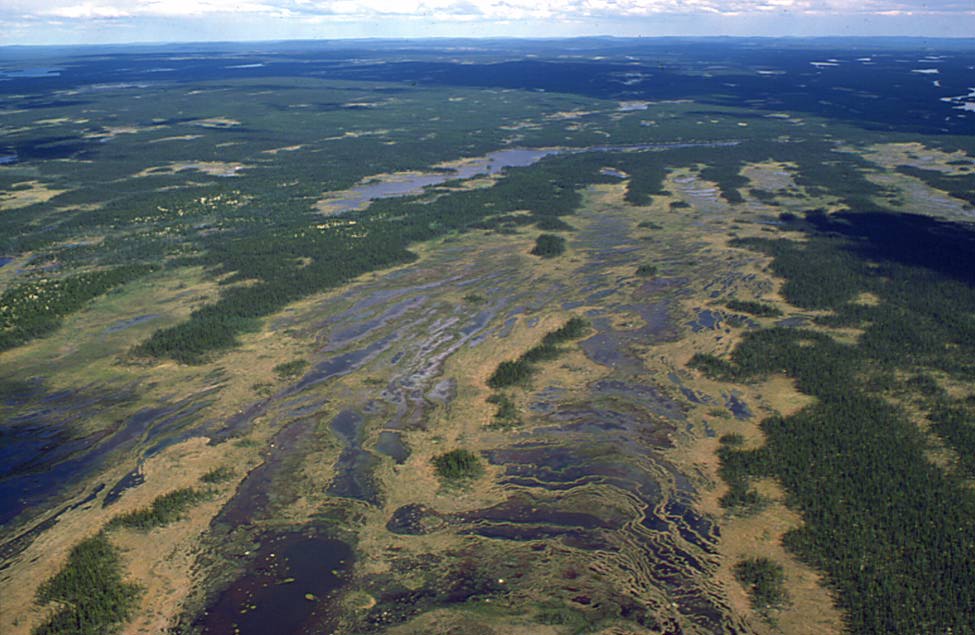
Fens. A word that brings with it the mystic imagery of witch lights, Beowulfian countrysides, trolls, swamp gas, dragons. A sight of crumbling towers overlooking black waters. Now, it’s a word we can add to our already long list of amplifying Arctic feedbacks to human-caused warming. For the rapid formation of Arctic fens over the past decade has now been linked in a recent scientific study, at least in part, to a return to atmospheric methane increases since 2007.
Ribbed Fen
(A Ribbed Fen in Arctic Canada. Image source: The Government of Canada.)
The Role of Methane in Past Climate Change
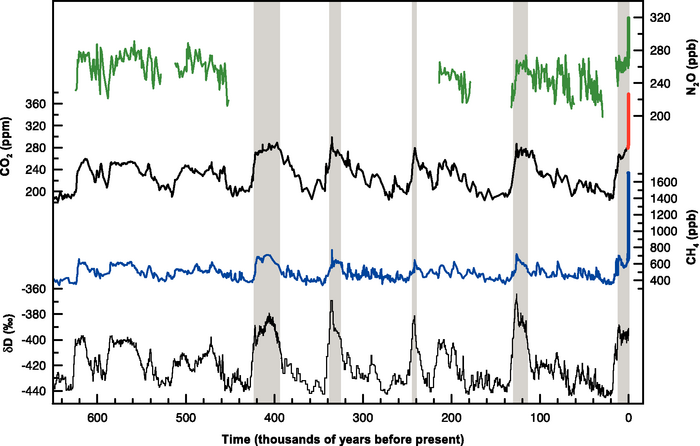
Over the past 800,000 years, ice core records show atmospheric methane levels fluctuating between about 800 parts per billion during warm interglacial periods and about 400 parts per billion during the cold ice age periods. These fluctuations, in addition to atmospheric CO2 flux between 180 and 280 parts per million value were due to Earth Systems feedbacks driven by periods of increased solar heat forcing in the northern hemisphere polar region and back-swings due to periods of reduced solar heat forcing.
Apparently, added solar forcing at the poles during periodic changes in Earth’s orbit (called Milankovitch Cycles) resulted in a flood of greenhouse gasses from previously frozen lands and seas. This new flood amplified the small heat forcing applied by orbital changes to eventually break Earth out of cold ice age periods and push it back into warm interglacials.
Compared to current human warming, the pace of change at the time was slow, driving 4-6 degrees Celsius of global atmospheric heating over periods of around 8 to 20 thousand years. A small added amount of solar heat gradually leached out a significant volume of heat trapping gasses which, over the course of many centuries, undid the great grip of ice on our world.
Ice core record of Greenhouse Gas Flux
(Ice core record of greenhouse gas flux over the last 650,000 years. Methane flux is shown in the blue line that is second from the bottom. It is worth noting that current atmospheric methane values according to measures from the Mauna Loa Observatory are now in excess of 1840 parts per billion value. Temperature change is indicated in the lowest portion of the graph in the form of proxy measurements of atmospheric deuterium which provide a good correlation with surface temperature values. The gray shaded areas indicate the last 5 interglacial periods. Temperature year 0 is 1950. GHG year zero is 2006 in this graph. Image source: IPCC.)
By comparison, under business as usual human fossil fuel emissions combined with amplifying feedbacks from the Earth climate system (such as those seen in the fens now forming over thawing Arctic tundra), total warming could spike to an extraordinarily damaging level between 5 and 9 degrees Celsius just by the end of this century.
Methane — Comparatively Small Volume = Powerful Feedback
A combination of observation of past climates and tracking the ongoing alterations to our own world driven by human greenhouse gas emissions has given us an ever-clearer picture of how past climates might have changed. As Earth warmed, tundra thawed and ice sheets retreated releasing both CO2 and methane as ancient organic carbon stores, trapped in ice for thousands to millions of years, were partly liberated from the ice. In addition, warming seas likely liberated a portion of the sea bed methane store even as warming brought on a generally more active carbon cycle from the wider biosphere.
Overall, the added heat feedback from the increases in atmospheric methane to due these processes was about 50% that of the overall CO2 feedback, even though the volume of methane was about 200 times less. This disproportionately large share of heat forcing by volume is due to the fact that methane is about 80 times more efficient at trapping heat than CO2 over the course of 20 years.
A Problem of High Velocity Thaw
In the foreground of this comparatively rosy picture of gradual climate change driven by small changes in solar heat forcing setting off relatively more powerful amplifying greenhouse gas feedbacks, we run into a number of rather difficult problems.
The first is that the rate at which humans are adding greenhouse gasses to the atmosphere as an initial heat forcing is unprecedented in the geological record. Even the great tar basalts of the end Permian Extinction were no equal to the rate at which humans are now adding heat trapping gasses to the atmosphere. In just a short time, from 1880 to now, we’ve increased atmospheric CO2 by 120 parts per million to around 400 ppm and atmospheric methane by more than 1100 parts per billion to around 1840 parts per billion. The result is an atmospheric heat forcing not seen in at least the past 3 million years and possibly as far back as 10 million years (due to the radical increase in methane and other non CO2 heat trapping gasses).
This extraordinary pace of heat trapping gas increase has led to a very rapid pace of global atmospheric temperature increase of about .15 degrees Celsius per decade or about 30 times that of the end of the last ice age. As atmospheric heat increases are amplified at the poles and, in particular in the northern polar region, the areas with the greatest stores of previously frozen carbon are the ones seeing the fastest pace of warming. Siberia, for example, is warming at the rate of .4 C per decade. Overall, the Arctic has warmed by about 3 degrees Celsius since 1880 or nearly 4 times the pace of overall global warming.
arctic temperature increase since 1880 NASA
(Pace of Arctic warming since 1880 in degrees Fahrenheit based on reports from 137 Arctic observation stations over the period. Image source: Tamino. Data source: NOAA’s Global Historical Climatology Network.)
The result is that, over the past two decades, the Arctic has been warming at the pace of about .6 C (1 F)every ten years. And what we are seeing in conjunction with very rapid warming is an extraordinary high-velocity thaw. A thaw that is rapidly liberating stored organic carbon locked in tundra at a rate that may well have no rational geological corollary.
The Arctic Methane Monster and a Multiplication of Fens
So it is in this rather stark set of contexts that a study released in early May examining 71 wetlands around the globe found rapidly melting permafrost was resulting in the formation of an immense number of fens along the permafrost thaw boundary zone. Tundra melt in lowlands became both sources and traps for water. Such traps gained added water as atmospheric temperature increases held greater levels of humidity resulting in increased heavy rainfall events such as thunderstorms. These newly thawed and flooded fens, the study found, were emitting unexpectedly high volumes of methane gas.
From the methane standpoint, fens are a problem due to the fact that they are constantly wet. Whereas bogs may be wet, then dry, fens remain wet year-round. And since bacteria that break down the recently thawed organic carbon stores into methane thrive in a constantly wet environment the fens were found to be veritable methane factories. A powerful amplifying feedback loop that threatens to liberate a substantial portion of the approximately 1,500 gigatons of carbon stored in now melting tundra as the powerful heat trapper that is methane.
Mauna Loa Methane 1985 to 2014
(Mauna Loa methane levels 1985 to 2014. A return to rising atmospheric levels post 2007 is, in part, attributed to rapid tundra thaw and the formation of methane producing fens. Other significant new methane sources likely include sea bed methane from Arctic stores and rising human methane emissions due to expanding coal use and hydraulic fracturing. Image source:NOAA ESRL.)
By comparison, drier environments would result in the release of stored carbon as CO2, which would still provide a strong heat feedback, but no-where near as powerful as the rapid environmental forcing from a substantial methane release.
Lead study author Merritt Turetsky noted:
“Methane emissions are one example of a positive feedback between ecosystems and the climate system. The permafrost carbon feedback is one of the important and likely consequences of climate change, and it is certain to trigger additional warming. Even if we ceased all human emissions, permafrost would continue to thaw and release carbon into the atmosphere. Instead of reducing emissions, we currently are on track with the most dire scenario considered by the IPCC. There is no way to capture emissions from thawing permafrost as this carbon is released from soils across large regions of land in very remote spaces.”

Links:

Labels: , , ,

Tuesday, November 19, 2013

Me, or your lying eyes?


Walk with me, talk with me
Natalia, Natalia, Natalia

 Van Morrison 


Greetings

          Is Abrupt Climate Change due to methane releases from the Arctic something we should be concerned about?     Not according to the IPCC.     Yet, according to this article :  Climate change crisis intensifies: 'Methane levels are going through the roof,  recent readings are very high.
The latest levels published today have recorded methane readings "well over 2600 ppb at multiple altitudes, as illustrated by the image." (see slideshow to the left of this article)
What is considered a "normal" release of methane? According to Dr. James Hansen, an American adjunct professor in the Department of Earth and Environmental Sciences at Columbia University, 1250 ppb is a livable level. To put that into perspective, the current number of methane being released is twice that level.
       I generally like to go with IPCC.  However, they have been known to be very conservative.         

       I get the impression it all comes down t Dr Natalia Sahkhova,  who is up there studying where no one else is.   She's getting some disturbing readings. And no one really has a good explanation.  They don't fit with the models.   So they either don't accept the measuerments, or chalk it up to some local anomaly

Here's what Prof Peter Wadhams says:  in response to criticism of his paper in Nature, which relied on Sahkova's data

"In support of its skepticism about methane emissions the article quoted authors who wrote before the enormous retreat of summer Arctic sea ice and its oceanographic effects became so evident. The mechanism which is causing the observed mass of rising methane plumes in the East Siberian Sea is itself unprecedented and the scientists who dismissed the idea of extensive methane release in earlier research were simply not aware of the new mechanism that is causing it.
"What is happening is that the summer sea ice now retreats so far, and for so long each summer, that there is a substantial ice-free season over the Siberian shelf, sufficient for solar irradiance to warm the surface water by a significant amount – up to 7C according to satellite data. That warming extends the 50 m or so to the seabed because we are dealing with only a polar surface water layer here (over the shelves the Arctic Ocean structure is one-layer rather than three layers)  and the surface warming is mixed down by wave-induced mixing because the extensive open water permits large fetches.  So long as some ice persisted on the shelf, the water mass was held to about 0C in summer because any further heat content in the water column was used for melting the ice underside. But once the ice disappears, as it has done, the temperature of the water can rise significantly, and the heat content reaching the seabed can melt the frozen sediments at a rate that was never before possible.
- See more at: here


    Here's a couple of articles for your consideration.  Here's a  Video : Last Hours  ( h/t LarryT)
-----

The methane emergency-denying IPCC

Never mind the evidence - the problem does not exist, says the science-by- committee IPCC

Just do NOT tell them the monster exists

The Arctic Methane Monster
7 October, 2013

As discussed in a previous post, the IPCC appears to be acting as if there was a carbon budget to divide among countries, whereas in reality there is a huge carbon debt to our children, while the situation could become catastropic any time soon.


Indeed, carbon dioxide is not the only greenhouse gas and the Arctic methane monster is threatening to disrupt the cosy lifetyle of those who want to keep selling parts of such non-existing carbon budgets.

So, who do you think the IPCC has been listening to, to reach a conclusion after six years of analysis? Experts or snake oil sellers? The cartoon may give you a hint, but why don't you make up your own mind by going over the IPCC statements and comments below.

Abrupt Climate Change

The IPCC recently issued AR5 documents that included a discussion of Abrupt Climate Change.

from: IPCC AR5 Working Group 1 Technical Summary (final draft)

The IPCC gives some examples:

Yes, methane release from clathrates sounds scary.

If there is little consensus on the likelyhood, then surely some experts do believe it is likely. Yet, the IPCC somehow reaches the following conclusion, and does so with high confidence:


Unlikely? What was the basis for this IPCC conclusion? 


This seems like a conclusion that can only have been reached after a robust analysis of all the evidence. So, how did the IPCC reach this conclusion, given that it did so with such high confidence?

Let's have a look. The above conclusion is preceeded by this statement:


OK, that means clathrates will increasingly become destablilized. The IPCC then adds an argument why this would not result in abrupt climate change this century. 


Sure, but that's just one rather insignificant negative feedback, compared to the many more significant positive feedbacks, such as melting causing isostatic rebound that can contribute to the occurrence of earthquakes and landslides, in turn triggering methane release. Yet, without even mentioning these positive feedbacks, the paragraph then jumps to the following conclusion:


If these initial estimates are not insignificant and if it's all rather difficult to formally assess, how then is it possible that the IPCC reached its end-conclusion with such high confidence? Moreover, was there any basis for these "initial estimates"? Perhaps there's more elsewhere in the IPCC documents. Here's another paragraph that preceeded the above.


All this expresses is low confidence in existing modeling and lack of understanding of the various processes. Again, how then is it possible that the IPCC reached its conclusion with such high confidence?

How much methane is currently released from hydrates?

On this, the IPCC says:


OK, so things could become scary. And sure, there are no large abrupt releases taking place now, but that doesn't mean there's not going to be any in future. In case of gradual processes, it makes sense to base projections on historic releases. In case of abrupt releases, however, current releases should not be the basis for reaching a conclusion with high confidence.


So, was the work of Dr. Natalia Shakhova perhaps used as the basis for these estimates? Read on!


How much methane is stored under the Arctic Ocean?


How much methane is present in sediments under the seabed of the Arctic Ocean, in the form of free gas and hydrates? On this, the IPCC says in FAQ6:


That doesn't seem to reflect the estimates of Dr. Natalia Shakhova. The total 
amount of methane currently in the atmosphere is about 5 Gt. Saying that more than 50 Gt of methane could be stored in hydrates the Arctic seems deceptive and appears to be seriously downplaying a very dangerous situation.

Natalia Shakhova et al. in 2010 estimated the accumulated potential for the East Siberian Arctic Shelf (ESAS) region alone (image on the right) as follows:
  • organic carbon in permafrost of about 500 Gt
  • about 1000 Gt in hydrate deposits
  • about 700 Gt in free gas beneath the gas hydrate stability zone.
Back in 2008, Natalia Shakhova et al. considered release of up to 50 Gt of predicted amount of hydrate storage as highly possible for abrupt release at any time. Did the IPCC perhaps misread the figures, mistaking the part of the methane that is ready for abrupt release for the total amount of methane in the Arctic?


How long could it take for large amounts of methane to reach the atmosphere?


How long could it take for large amounts to reach the atmosphere? On this, the IPCC says in FAQ6, in the same and the next paragraph:


Below, a screenshot from an interview of John Mason with Natalia Shakhova, published at:
http://www.skepticalscience.com/arctic-methane-outgassing-e-siberian-shelf-part2.html


In conclusion, Dr Natalia Shakhova also rejects the idea that methane release from hydrates always takes place gradually, over a long time. Especially in the Arctic, there's a huge danger of abrupt release, given the accelerated warming that takes place in the Arctic, given the huge amounts of methane stored in sediments in the form of free gas and methane, given the presence of a tectonic fault line, etc, etc.


Once released, methane won't get broken down easily in the Arctic Ocean, as this requires the presence of bacteria that can oxidize the methane, as well as free oxygen in the water. Once depleted, oxygen isn't quickly replenished in the Arctic Ocean. Lack of bacteria and depletion of oxygen in the waters of the Arctic Ocean could prevent oxidation of methane rising up in the waters, as described at:
http://methane-hydrates.blogspot.com/2012/03/large-areas-of-open-ocean-starved-of.html


In the Arctic, low temperatures mean there are less bacteria that need more time to break down the methane. In other places, currents may bring bacteria back to the location of the methane plume repeatedly. In the Arctic, many currents are long, so once bacteria have flow away from the location of the plume, they could be driven out of the Arctic Ocean or may return only after a long time, i.e. too long to survive in Arctic waters which are cold and often ice-covered, so a lot of time little or no sunshine penetrates the waters.


In the Arctic, the danger is much larger that methane releases will overwhelm the capacity of bacteria to break it down in the water. In case of large abrupt releases in the Arctic, the danger is that much of the methane will reach the atmosphere unaffected and remain there for a long time, due to the Jet Stream and the low levels of hydroxyl in the Arctic atmosphere, as further described at:
http://methane-hydrates.blogspot.com/2013/04/methane-hydrates.html


BTW, how did all this methane manage to reach the atmosphere over the Arctic Ocean? 


Methane levels over the Arcic Ocean appear to be rising, as illustrated by the combination of images below, showing methane levels over five years (2009 on the left, to 2013 on the right), each time for the same period (January 21-31) - images by Dr. Leonid Yurganov.


[ Click on image to enlarge - from: Dramatic increase in methane in the Arctic in January 2013 ]


If the IPCC was right, how then was it possible methane levels to rise so sharply and abruptly. How was it possible for large amounts of methane to be present over the deep waters of the Arctic Ocean, as discussed at:http://arctic-news.blogspot.com/2013/10/methane-over-deep-waters-of-arctic-ocean.html


[ How did this methane get there? - click on image to enlarge - see also: Methane over deep waters of Arctic Ocean ]


There is a wealth of evidence from scientists such as Igor Semiletov and Natalia Shakhova who have - year after year - been taking measurements in the East Siberian Arctic Shelf, complete with first-hand reports that methane plumes have been detected.


"We've found continuous, powerful and impressive seeping structures more than 1,000 metres in diameter. In a very small area, less than 10,000 square miles, we have counted more than 100 fountains, or torch-like structures, bubbling through the water column and injected directly into the atmosphere from the seabed," Dr Semiletov said, "We carried out checks at about 115 stationary points and discovered methane fields of a fantastic scale - I think on a scale not seen before. Some of the plumes were a kilometre or more wide and the emissions went directly into the atmosphere - the concentration was a hundred times higher than normal."  -  Vast methane 'plumes' seen in Arctic ocean as sea ice retreats, by Steve Connor in The Independent, December 13, 2011.


The image below shows a cluster of methane plumes, over one km in diameter, that appeared in the Laptev Sea end September 2011. The image is part of a paper on the unfolding "Methane Catastrophe".


Of course, we all wished that we're wrong about this terrifying Arctic methane threat, but the precautionary principle demands a thorough investigation of observations that appear to be at odds with wishful thinking, especially when the stakes are so high. So, IPCC, where's the evidence?


====

How much should you worry about an Arctic methane bomb?

planet-earth-bomb.jpgIt was a stunning figure: $60 trillion.
Such could be the cost, according to a recent commentary [PDF] in the journal Nature, of “the release of methane from thawing permafrost beneath the East Siberian Sea, off northern Russia … a figure comparable to the size of the world economy in 2012.” More specifically, the paper described a scenario in which rapid Arctic warming and sea ice retreat lead to a pulse of undersea methane being released into the atmosphere. How much methane? The paper modeled a release of 50 gigatons of this hard-hitting greenhouse gas (a gigaton is equal to a billion metric tons) between 2015 and 2025. This, in turn, would trigger still more warming and gargantuan damage and adaptation costs.
The $60 trillion figure went everywhere, and no wonder. It’s jaw-dropping. To provide some perspective, 50 gigatons is 10 times as much methane as currently exists in the atmosphere. Atmospheric methane levels have more than doubled since the industrial revolution, but this would amount to a much sharper increase in a dramatically shorter time frame.
According to the Nature commentary, that methane “is likely to be emitted as the seabed warms, either steadily over 50 years or suddenly.” Such are the scientific assumptions behind the paper’s economic analysis. But are those assumptions realistic — and could that much methane really be released suddenly from the Arctic?
A number of prominent scientists and methane experts interviewed for this article voiced strong skepticism about the Nature paper. “The scenario they used is so unlikely as to be completely pointless talking about,” says Gavin Schmidt, a noted climate researcher at the NASA Goddard Institute for Space Studies in New York.
Schmidt is hardly the only skeptic. “I don’t have any problem with 50 gigatons, but they’ve got the time scale all wrong,” adds David Archer, a geoscientist and expert on methane at the University of Chicago. “I would envision something like that coming out, you know, over the centuries.”
Still, the Nature paper is the most prominent airing yet of concerns that a climate catastrophe could be brought on by the release of Arctic methane that is currently frozen in subsea deposits — concerns that seem to be mounting in lockstep with the dramatic warming of the Arctic. That’s why it’s important to put these fears into context and try to determine just how much weight they ought to be accorded.
Methane on ice
Let’s start with some basics on methane — CH4 — a greenhouse gas that reaches the atmosphere from sources as diverse as wetlands, gas drilling, and cow burps. Compared with carbon dioxide, methane is kind of like the boxer who punches himself out in the early rounds, whereas carbon dioxide goes the distance and wins by TKO. Pound for pound, methane causes some 25 times as much global warming[PDF] as carbon dioxide does. But it only remains in the atmosphere for about nine years, on average, before chemical processes break it down. Carbon dioxide, in contrast, has a far longer atmospheric residence time.
What this means is that methane is most worrisome if a lot of it gets into the atmosphere over a relatively short time period — precisely the scenario contemplated by the Nature paper. So could that happen?
The answer depends on a complicated and uncertainty-laden issue — the stability of frozen deposits of subsea methane in the Arctic region. Frankly, it’s hard to imagine something harder to study: We’re talking about deposits residing not only beneath one of the world’s most remote and inaccessible oceans, but also beneath the sea floor itself.
Much of the world’s methane is concentrated in the form of so-called gas “hydrates,” icelike solids that form from methane and water at cold temperatures and high pressures, e.g., deep beneath the ocean floor. According to the U.S. Geological Survey, the total global carbon content of such methane hydrates is estimated to equal some 1,800 gigatons (to be sure, there is considerable uncertainty about this estimate).
Cross-section showing the location of methane hydrates, which are most vulnerable to dissolution in regions 2 and 3.U.S. Geological SurveyCross-section showing the location of methane hydrates, which are most vulnerable to dissolution in regions 2 and 3.
One thousand eight hundred gigatons would create a climate catastrophe if it were all to be suddenly released, but the vast majority of subsea methane is under deep water, and quite stable. Only a relatively small fraction of global methane hydrates are at issue in the Nature paper, and this methane is in a very peculiar situation: It is frozen in the subsea permafrost of relatively shallow continental shelves in the Arctic region. This frozen sediment was once coastline, but was submerged as oceans rose following the last Ice Age. And now, it is being bathed in warmer waters due to the warming of the Arctic.
So how much should we worry that these particular methane hydrates might melt, releasing gas that would then travel through both sediment and seawater to reach the atmosphere? That’s where the scientific debate begins — over both how much methane falls into this category, and how vulnerable it is to the warming that is now gripping the Arctic region.
Peering beneath the East Siberian Sea
The methane disaster concerns gained major prominence with a2010 paper in Science by University of Alaska-Fairbanks researcher Natalia Shakhova and her colleagues, who examined methane emissions in a very remote area of the Arctic, the East Siberian Sea north of Russia. The continental shelf underlying this ocean is more than 2 million square kilometers (1.2 million square miles) in size, and its subsea permafrost lies only about 50 meters below the sea surface. Traveling to the remote region in Russian ice-breakers, Shakhova’s team sampled water content and air content at the sea surface repeatedly, over a series of years. They found high concentrations of methane in the water — “50 percent of surface waters are supersaturated with methane,” the paper reported — and some of the gas was also venting from the water into the atmosphere.
East_Siberian_Sea_mapWikimedia Commons
Although the Science paper did not contain the figure, it seems clear that Shakhova is the source for the idea that a 50-gigaton release of methane could occur in a short time frame. Or as she put it in a2008 abstract [PDF], “[W]e consider release of up to 50 Gt of predicted amount of hydrate storage as highly possible for abrupt release at any time,” adding that this could lead to “catastrophic greenhouse warming.” The Nature paper cited another 2010 paperby Shakhova and her colleagues in the journal Doklady Earth Sciences, which uses the 50-gigaton figure in discussing possible methane emission scenarios.
Shakhova did not respond to several requests for comment for this article; her automatic email response said she was out doing fieldwork. But Peter Wadhams, the Cambridge physicist who is a coauthor of the Nature paper, said that his work relied on that of Shakhova and her team because “they’ve done the most work there, working there every year, doing field observations … we would rather base it on the estimates of the people actually working there, rather than the people who aren’t working there.” Here is a video of Shakhova discussing her research:
The trouble is that at this point, many other scientists don’t accept that work — or rather, don’t agree about its implications. None seem to dispute the actual measurements taken by Shakhova and her team, but as soon as the Science paper came out, a group of researchers questioned the idea that there was any cause for alarm. “A newly discovered [methane] source is not necessarily a changing source, much less a source that is changing in response to Arctic warming,” they wrote. The implication is that perhaps methane has always been in the water at such levels, without methane hydrates having been disturbed — rather, the methane may be from another source. According to one 2011 study, for instance, the observed methane probably came not from hydrates, but simply from “the permafrost’s still adjusting to its new aquatic conditions, even after 8,000 years.” The hydrates, in contrast, are thought to be much deeper below the sea surface, due to basic physical constraints on their formation and stability. According to the U.S. Geological Survey, “in permafrost areas, methane hydrate is not stable until about 225 m [738 feet] depth.”
Indeed, according to Ed Dlugokencky, who monitors global atmospheric methane levels at the National Oceanic and Atmospheric Administration, “so far, there has not been a significant increase in methane emissions in the Arctic.” In other words, if methane is really starting to vent into the air in large quantities, Dlugokencky says he isn’t seeing it.
A debate over hydrate depth
And that’s just the first reason that many scientists are skeptical. According to Carolyn Ruppel, who heads the Gas Hydrates Project at the U.S. Geological Survey, there just isn’t that much vulnerable methane in submerged permafrost to begin with. “We think very little hydrate on this planet is associated with permafrost, either subsea or terrestrial,” she says. Inspired in part by the Shakhova research, the USGS undertook to study the continental shelves of the Beaufort Sea, off Alaska and Canada. “We set out to test this idea that all of the Arctic shelves were going to have high methane emissions,” she says. “And at least for the U.S. Beaufort shelf, we’re not seeing them.”
Ruppel acknowledges that due to Arctic warming, more methane is going to be released, much of it from permafrost on land. But, she continues, “I would say one of the least likely sources is methane gas hydrates. You are limited by the laws of physics,” she adds — noting that the beginning of the zone of stability for these hydrates is some 220 meters (722 feet) deep. That’s a recurrent refrain among skeptics — they say hydrates just can’t form above a certain depth, and warming can’t penetrate such a depth very quickly. “You’ve got to go from the sea floor of 50 meters depth, down to 200 meters where the hydrate is,” explains the University of Chicago’s David Archer. “So that just takes a long time.”
Moreover, even if subsea permafrost methane hydrates do thaw, the liberated gas still has to travel through layers of sediment just to get to the ocean floor. So how does that happen? “That’s kind of mysterious,” says Archer. Perhaps there will be open pathways for gas in some places, but perhaps there won’t. Archer also notes that there have been undersea explosions or landslides that release methane in bursts, but “those kinds of things seem like they would be relatively small compared to 50 gigatons, and they would happen sporadically in time over centuries; not everything blows up in a few years.”
Nonetheless, imagine that methane gas from melted hydrate makes it to the sea floor. It now exists as bubbles with, say, 50 meters (164 feet) to go before they reach the sea surface. Most of the bubbles won’t make it, say scientists: They’ll be dissolved in seawater, and then the methane will be broken down by microorganisms over a period of months. “If methane is in the ocean water column, most of it doesn’t get out,” explains Bill Reeburgh, a professor of earth system science at the University of California-Irvine who has spent his career studying methane. “Most of it is oxidized” by bacteria, which turn it into carbon dioxide and water, Reeburgh continues. “So all these stories about seeps, people seem to think the bubbles go straight to the atmosphere, and they don’t.”
In other words, while the waters of the East Siberian Sea may be full of dissolved methane, for many scientists that doesn’t prove that hydrates have been disturbed, or that the Arctic is starting to vent large amounts of methane from below the sea floor into the atmosphere. Not yet, anyway.
Nonetheless, Cambridge’s Peter Wadhams takes a different view. Of the critics, he says that “it comes to not believing that these scientists who are actually working there know what they’re talking about, which I would say is kind of insulting to them.” Wadhams also says that there is a new mechanism for methane hydrate release that the critics aren’t considering. The retreat of Arctic sea ice, he suggests, is allowing very intense warming of the waters above continental shelves. He adds that there are certain hydrates “detectable at 20 meters [66 feet]” below the sea floor, far shallower than normal. Wadhams calls these hydrates “Ice Age relics” that formed under very different conditions. Shakhova, too, has referred in the past to hydrates occurring at 20 meters depth, saying they have been “sampled in Siberia.”
Other scientists remain skeptical. David Archer says his simulations “never see hydrate stability” above 250 meters (820 feet).
So should you worry?
What is clear about this story, then, is that one group of scientists has articulated a set of concerns that a number of others just do not accept at this point. And no doubt this problem is exacerbated by the realities of methane hydrate research — it is extremely difficult (and costly) to take a scientific expedition to the East Siberian Sea, or for that matter, to conduct Arctic research in general. In this case, it appears that one research team, the one actually working in this area, has developed views distant from those of many other researchers.
So what should you do — and what should you think? Bear in mind that there are many good reasons to be skeptical of a methane disaster — it is hardly a matter of scientific consensus that this is a real concern. And that stands in stark contrast to the issue of climate change in general, an issue on which scientists are overwhelmingly aligned (and where the solution remains incredibly obvious: cutting carbon emissions).
As global warming proceeds, it is also important to step back and acknowledge that with the unprecedented warming of the Arctic, it would be surprising if there weren’t surprises. When we bring on warming this fast, we risk unpredictable consequences, whether with regard to methane or something else.
“It’s weird for me to be saying, ‘Oh, it could never happen.’ It’s always the wrong side of things when you’re talking about nature,” says David Archer of the Arctic methane catastrophe scenario. “But,” he adds, “nobody’s come up with a defendable way of it happening all at once.”
This story was produced by Mother Jones as part of the Climate Desk collaboration.
Chris Mooney is a science and political journalist, blogger, podcaster, experienced trainer of scientists in the art of communication, and the host of Climate Desk Live.


Labels: , , , ,