Teach your children well
Sweet child of mine.
- Guns and Roses
Oh, what'll you do now, my blue-eyed son?
Oh, what'll you do now, my darling young one?'
-Bob Dylan
Greetings
I just watched Nate Hagens's latest video, which is a mini version of his " Reality 101" course that he teaches at the University of Minnesota.
It's a pretty ambitious program. Here is a short description:
"An intensive series of reading, lectures and discussion will cover primary/summary literature in: systems ecology, energy and natural resources, thermodynamics, history, anthropology, human behavior, neuroscience, evolutionary psychology, environmental science, sociology, economics, globalization/trade, finance/debt with an overarching goal to give students an understanding of how the modern human ecosystem really functions, and what are the opportunities and constraints facing us in the 21st century.
You can find the syllabus here (2014 version)
It seems like it might be a useful course, given how fast things are changing!
Here's a graph from a recent paper, showing the temperature variation during the last 10,000 years. Notice the far right, the divergence in the last few years. What should we expect?

Hagens assumes that we will continue on this path. which seems reasonable see this from Climate Code Red
The climate system will heat well past 1.5 degrees Celsius (°C) and perhaps up to 2°C without any further fossil fuel emissions. That’s the conclusion to be drawn from new research which should also help demystify the rhetoric from the 2015 Paris climate talks of keeping warming to below 1.5°C .
It’s not that 1.5°C isn’t dangerous: in fact, at just 1–1.1°C of warming to date, climate change is already dangerous. A safe climate would be well below the present level of warming, unless you think it is OK to destroy the Arctic ecosystem, tip West WestAntarctic glaciers into a self-accelerating melt, and lose the world’s coral reefs, just for starters.
“‘The Holocene climate system is unraveling,’ Jason Box, an ice researcher at the Danish Meteorological Institute, told Earther in an email. ‘We should not be surprised if/when ongoing de-glaciation of the Arctic combined with global (and Arctic) atmospheric heating and humidification causes climate shifts that appear to be step changes.'
"People have the misapprehension that we can recover from this [ice free] state just by reducing carbon emissions" , Anderson said in an appearance at the University of Chicago. " Recovery is all but impossible, he argued, without a World War II-style transformation of industry—an acceleration of the effort to halt carbon pollution and remove it from the atmosphere, and a new effort to reflect sunlight away from the earth’s poles.”….”This has do be done…. within the next five years.”
So, how does one make long term plans that factor in rapid climate change?
“Given that all the scientific models are failing to predict the pace that climate impact’s actually having, how do you do good public policy?” he said on the sidelines of the C40’s Women4Climate conference.
Nearly half of the 92 cities in the C40 network saw extreme flooding last year, according to Watts, who said an “optimism bias” was built into scientific forecasts.
See also Dave Roberts on flood risk. We’ve radically underestimated how vulnerable Americans are to flooding
and this : What Can California do about sea level rise?
We are approaching the era of "Climate Departure", when the climate is so different from our historical experience, as to represent something completely new. See this
See e.g.North Pole surges above freezing in the dead of winter”Camilo Mora: The timing of climate departure is an index that calculated the year after which the climate will become like something that we’ve never seen. We calculated the minimum and maximum values for the historic variability in the last 150 years. And we analyzed when climate change is going to move the climate beyond those thresholds. At the broadest scale, we calculate that year, under a business as usual scenario, is going to be 2047. Basically, by the year 2047 the climate is going to move beyond something we’ve never seen in the last 150 years.e360: The results of your analysis were startling, I think, even to you and your team. Under the scenario that assumes current emissions trends, part of Jamaica and Indonesia are just a few years away from climate departure; you predict Mexico City will experience this in 2031.
"The sun won’t rise at the North Pole until March 20, and it’s normally close to the coldest time of year, but an extraordinary and possibly historic thaw swelled over the tip of the planet this weekend. Analyses show that the temperature warmed to the melting point as an enormous storm pumped an intense pulse of heat through the Greenland Sea.
Ways of sucking carbon dioxide from the air will not work on the vast scales needed to beat climate change, Europe’s science academies warned on Thursday.From simply planting trees to filtering CO2 out of the air, the technologies that some hope could be a “silver bullet” in halting global warming either risk huge damage to the environment themselves or are likely to be very costly.Virtually all the pathways laid out by the UN’s Intergovernmental Panel on Climate Change (IPCC) to reach the targets in the Paris agreement require huge deployment of so-called negative emissions technologies (NETs) in the second half of the century.This is because cuts in CO2 are expected to be too slow to hit zero emissions quickly enough, so the overshoot has to be recaptured later by NETs. The IPCC calculates that about 12bn tonnes a year will need to be captured and stored after 2050 – the equivalent of about a third of all global emissions today.“You can rule out a silver bullet,” said Prof John Shepherd, at the University of Southampton, UK, and an author of the report. “Negative emissions technologies are very interesting but they are not an alternative to deep and rapid emissions reductions. These remain the safest and most reliable option that we have.”
The new report is from the European Academies Science Advisory Council(EASAC), which advises the European Union and is comprised of the national science academies of the 28 member states. It warns that relying on NETs instead of emissions cuts could fail and result in severe global warming and “serious implications for future generations”.
"And we know now what the dread was we felt in December. Call it climate change or climate collapse, that was the Big Dread behind the smaller ones. Climate believers, climate deniers, deep in our hearts we think it will happen somewhere else. Or, in some other time, in 2025 or 2040 or next year. But we are here to tell you, in this postcard from the former paradise, that it won’t happen next year, or somewhere else. It will happen right where you live and it could happen today. No one will be spared.”
So, if you are driving around and flying on airplanes and ordering things to be shipped by truck and making money off oil stock the way so many of us are – like there’s no tomorrow? We are here to tell you there is a tomorrow and we are living in it.
What about energy?
Hagens believes that oil production will peak in the next ten years. This view is consistent with trends over the last decade of both higher costs of production, as well as a lower rate of investment in new fields see here .(Note that, this lack of investment has nothing to do with the recent decline in the oil price, which started in 2014. This has been an on-going problem for the past 30 years. Now, the IEA is predicting oil shortages by ~2020 due to declining exploration. )
There is a lot of talk about "peak demand" and the associated theory that, peak supply will not be a problem, because the transportation system will have already moved on the electric vehicles. This is of course dependent on the taste at which electric vehicles are adopted. There are a number of predictions about when EV sales would have an impact on oil use. You can take your pick from 2020 (Grantham Foundation) , 2025 (Bloomberg); 2030 (World Energy Council); or 2040 (BP), see here
As for the impact of EV's there remains some skepticism.
Robert Rapier points out that oil use continues to grow, even accelerate
The flaw in the scenario is that for over 30 years average oil demand has grown each year by more than a million BPD’’ Over the past decade, oil demand has grown each year by 1.1 million BPD. Over the past five years, 1.4 million BPD. Last week the bible of energy statistics was released — the BP Statistical Review of World Energy 2017 — and it showed that oil consumption grew by 1.6 million BPD last yearThe bottom line is that even in a best case scenario for EV growth rates, demand for oil rose by 1.6 million BPD last year, and it’s projected to increase by 1.4 million BPD this year.
And see this from IEA director, Fatih Birol
“Oil demand growth today is not driven by cars, it’s driven by trucks, planes, ships and the petrochemical industry,” the IEA’s executivedirector Fatih Birol said in January. “Even if there was a big electrification of cars in the years to come, oil demand will still grow.”Birol also points to the world’s poor track record since the 1980s on weaning itself off fossil fuels to decarbonize energy supplies.Over the last 30 years, he said, the share of fossil fuels has not fallen from 81%.
Thus, there is no guarantee that peak demand will precede peak supply. If peak supply comes first, then the price of oil is likely to rise likely affecting economic activity. See this study
When you don't know what is coming, Hagens suggest resilience and flexibility. And learning to live with less.
The "elite" apparently plan to seal themselves in their "enclaves" and tough it out. Or maybe Mars?
But whats about the rest of us? What about those students?
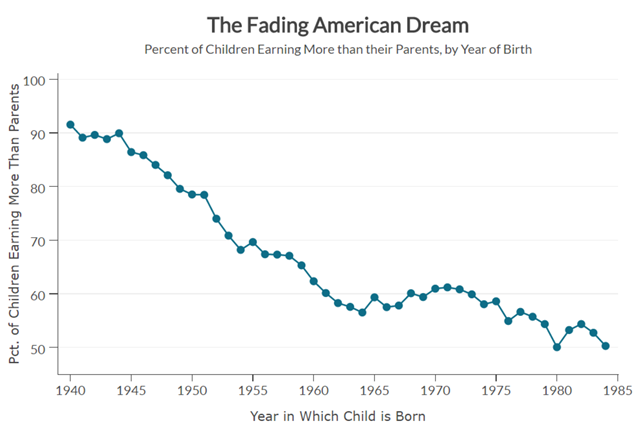
Its unlikely that these students can expect to live the same lifestyle as their parents. See here
What sort of models are available for achieving the "good life" in a sustainable manner? Are there any counties where that happens? Not really, according to this study
Such a "radical change " may require giving up on "time saving" devices and "conveniences", which provide more "free time" . But for what?That's the conclusion of a new study which looked at 151 nations and found not a single one was running itself in a sustainable way – ensuring a decent life for its inhabitants without taking more than it gives back in terms of natural resources....."We examined international relationships between the sustainability of resource use and the achievement of social goals, and found that basic needs, such as nutrition, sanitation, and the elimination of extreme poverty, could most likely be achieved in all countries without exceeding global environmental limits.""Unfortunately, the same is not true for other social goals that go beyond basic subsistence such as secondary education and high life satisfaction. Meeting these goals could require a level of resource use that is two to six times the sustainable level.""Although wealthy nations like the US and UK satisfy the basic needs of their citizens, they do so at a level of resource use that is far beyond what is globally sustainable."In contrast, countries that are using resources at a sustainable level, such as Sri Lanka, fail to meet the basic needs of their people."Among the countries doing the best job are Vietnam, with 6 social thresholds achieved and only 1 biophysical boundary transgressed, and Germany, which hits all 11 social thresholds but has exceeded 5 of the 7 biophysical boundaries....However there is some hope: the researchers say we can make adjustments to both ensure a good quality of life for the population and avoid destroying the planet at the same time.In other words, these feedback loops – which show better lives costing more resources – are not fixed, and we can work towards finding ways to support our population without taking too much out of what the planet can give us."Radical changes are needed if all people are to live well within the limits of the planet," says one of the team, Julia Steinberger from the University of Leeds."These include moving beyond the pursuit of economic growth in wealthy nations, shifting rapidly from fossil fuels to renewable energy, and significantly reducing inequality."Our physical infrastructure and the way we distribute resources are both part of what we call provisioning systems. If all people are to lead a good life within the planet's limits then these provisioning systems need to be fundamentally restructured to allow for basic needs to be met at a much lower level of resource use."
So, if Hagens is right, we are likely to see more climate chaos, and we will have less resources to deal with it.
But he is not despairing. He knows this means a lower "standard of living" with less conveniences, probably with a lot more work. Less flying, less driving, less buying. But perhaps more community, more time , more neighborliness.
Is there no hope? Perhaps that isn't the right question? This climate scientist suggest that what we need now is not hope, but courage.
As a climate scientist, I am often asked to talk about hope. Particularly in the current political climate, audiences want to be told that everything will be all right in the end. And, unfortunately, I have a deep-seated need to be liked and a natural tendency to optimism that leads me to accept more speaking invitations than is good for me. Climate change is bleak, the organizers always say. Tell us a happy story. Give us hope. The problem is, I don’t have any.
I have no hope that these changes can be reversed. We are inevitably sending our children to live on an unfamiliar planet. But the opposite of hope is not despair. It is grief. Even while resolving to limit the damage, we can mourn. And here, the sheer scale of the problem provides a perverse comfort: we are in this together. The swiftness of the change, its scale and inevitability, binds us into one, broken hearts trapped together under a warming atmosphere.We are all fated to live lives shot through with sadness, and are not worth less for it. Courage is the resolve to do well without the assurance of a happy ending. Little molecules, random in their movement, add together to a coherent whole. Little lives do not. But here we are, together on a planet radiating ever more into space where there is no darkness, only light we cannot see.
We need courage, not hope. Grief, after all, is the cost of being alive. We are all fated to live lives shot through with sadness, and are not worth less for it. Courage is the resolve to do well without the assurance of a happy ending. Little molecules, random in their movement, add together to a coherent whole. Little lives do not. But here we are, together on a planet radiating ever more into space where there is no darkness, only light we cannot see.
The Post Carbon Institute (now located in Corvallis) offers a number of resources to help people deal with our future. Besides books such as the Community Resilience Reader,
PCI also offers on line courses such as Think Resilience:Preparing Communities for the Rest of the 21st CenturyNational and global efforts have failed to stop climate change, transition from fossil fuels, and reduce inequality. We must now confront these and other increasingly complex problems by building resilience at the community level. The Community Resilience Reader combines a fresh look at the challenges humanity faces in the 21st century, the essential tools of resilience science, and the wisdom of activists, scholars, and analysts working with community issues on the ground. It shows that resilience is a process, not a goal; that resilience requires learning to adapt but also preparing to transform; and that resilience starts and ends with the people living in a community.
Post Carbon Institute Senior Fellow Richard Heinberg sat down to deliver a 22-chapter lecture series entitled “Think Resilience: Preparing Communities for the Rest of the 21st Century,” which explores how communities can build resilience in the face of our intertwined sustainability crises. The series is intended for students and concerned individuals of all ages.New chapters will be rolled out on a regular basis over the coming weeks, but you can also sign up to view all the videos right away or watch them as part of an online, interactive course taught by Richard Heinberg himself.
Labels: climate, heinberg, Nate Hagens, Peak Oil
posted by Walter @ 2:49 PM
0 Comments

